Showing posts with label eggs. Show all posts

Tuesday, July 27, 2010

Texas at the Table: Part One.

And So it Begins, with Five Fearless Feather-Pluckin’ Females:

at the Table in Waco, TX

Whilst in Waco, we – the lovely ladies of the Texas at the Table: Project Go Road Trip – harvested and gleaned both vegetables and stories with dirty-fingernail-ed farm-hands and business-suited theological-thinkers. Waco is the first stop on the Texas at the Table Road Trip to explore how people across Texas creatively address hunger in their communities – or more simply, exploring where food comes from, who gets it, and who doesn’t.
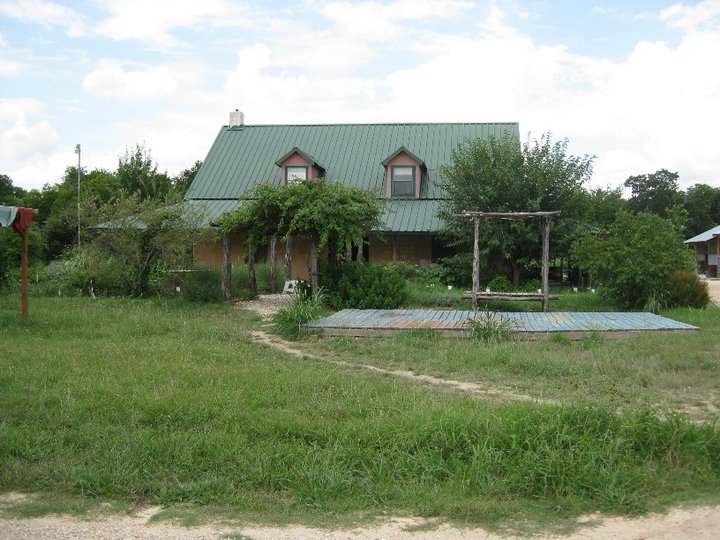
the World Hunger Relief Farm.

Day 0.5 (the evening of our first gathering – thus not the legitimate Day One in my play-book): The much arrival happens. Five fearless ladies convene – with parental units – on the World Hunger Relief Farm in Waco, TX. The parents step out of their comfortably AC-ed vehicles to be hit brazenly in the face by the Farm – the heat, the smell. Welcome. The gals are starting to question what they’ve gotten themselves into. And perhaps, so are their leaders. All meet and greet each other awkwardly. A short tour of the Farm is given – complete with instructions that this is a flush-free farm (only composting toilets) and the home they will be staying in does not have running water or electricity. Parents leave reluctantly – they have left their daughters to the care of a lady with a lip-loop and nose-ring and the other one has tattoos . . . Introductory awkwardness subsides and its dinnertime. Except that dinner must first be harvested. Kale. Swiss chard. Onions. Peppers. (Supplemented with Bethel’s peanut sauce and rice). This dinner is a strange experience (in addition to the heat and composting toilets) because: 1. These gals never really cook; and 2. They don’t ever really eat vegetables. Whataburger seems to be a staple dinner. Bethel (the leader with tattoos and braids – and also the leader with tattoos) begins to worry . . .
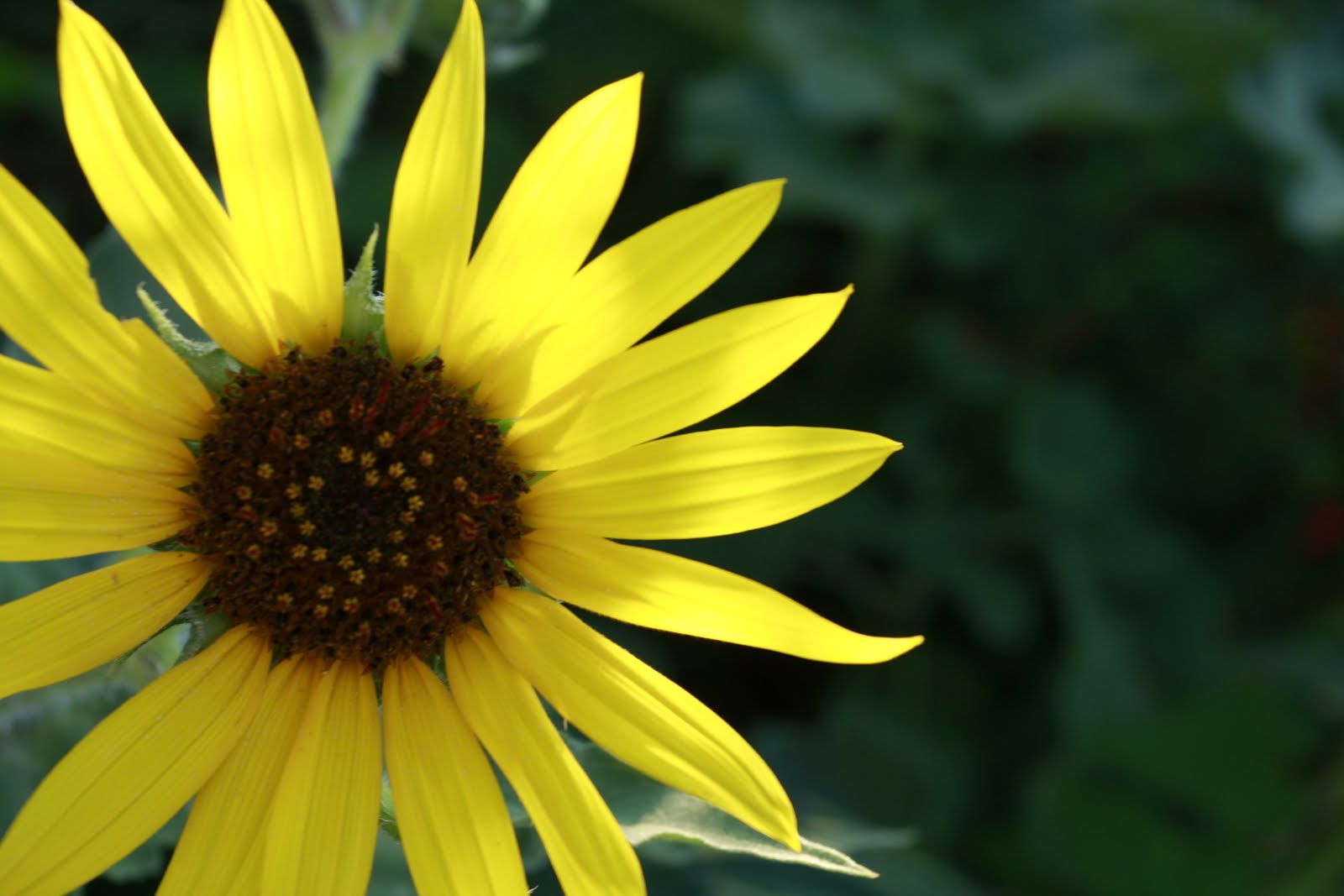
Sunflowers for CSA harvest at the World Hunger Relief Farm.

Day One: No rest for the weary – or the farmer. Devotions at the Farm start at 7am. Lucas Land -Truett grad and former Farm intern – leads a discussion of personal heresies and the Bible. Work chores are handed out. Most farm folks are working the CSA (Community Supported Agriculture) harvest – the Farm supplies 60 families in the Waco-area with a week’s worth of fresh vegetables for 8 months a year, on a subscription basis. CSA is just one model of direct-to-consumer farm marketing allowing farmers to know that what is planted has a home once out of the field, creating a relationship between farmers and those who eat the food the farmer grows. All that to say, the Go Now-ers jumped into harvesting bouquets of basil, counting cucumbers and eventually bundling sunflowers for shares. After moving the chickens in their portable coop-mobiles, designed to rotate the chickens to fresh pasture – which leads to eggs richer in beta-carotene and omega 3 and 6 fats, all part of a healthy, balanced diet. After a farm-family lunch, Farmer Jes talked with the gals about raw milk as the gals washed eggs freshly collected from our clucking lady-friends. The Farm manages a Grade A Raw Goat Milk dairy – containing the healthy bacteria that aids in digestion for even those who are lactose-intolerant.

the Lorena stove over which our meal was cooked.

Without a siesta, the real work for the day begins. Making dinner. From scratch. Over a wood-burning Lorena stove. Without running water. With meat that must be caught and killed before eaten. This is no simple task for five young ladies not used to cooking, let alone with modern day appliances – and in the heat of the day. Two roosters were caught by Dani and Chelsea, who were brave enough to volunteer for the slaughter.

An education in chicken butchering with farmers Lucas and Bethel.

Necks were slit (albeit with a dull knife) and the birds were bled out and plucked, while the rest of the gals gathered garden vegetables and pumped water from a well. Four hours later, a simple meal of chicken and rice with greens was prepared and placed on the table for all to eat. Delicious to all except those still smelling chicken feathers beneath their nails. With bellies brimming with fresh eats and tasty meats, the gals ended their evening with a showing of Food, Inc. – posing even more questions in already wearied and worried minds.
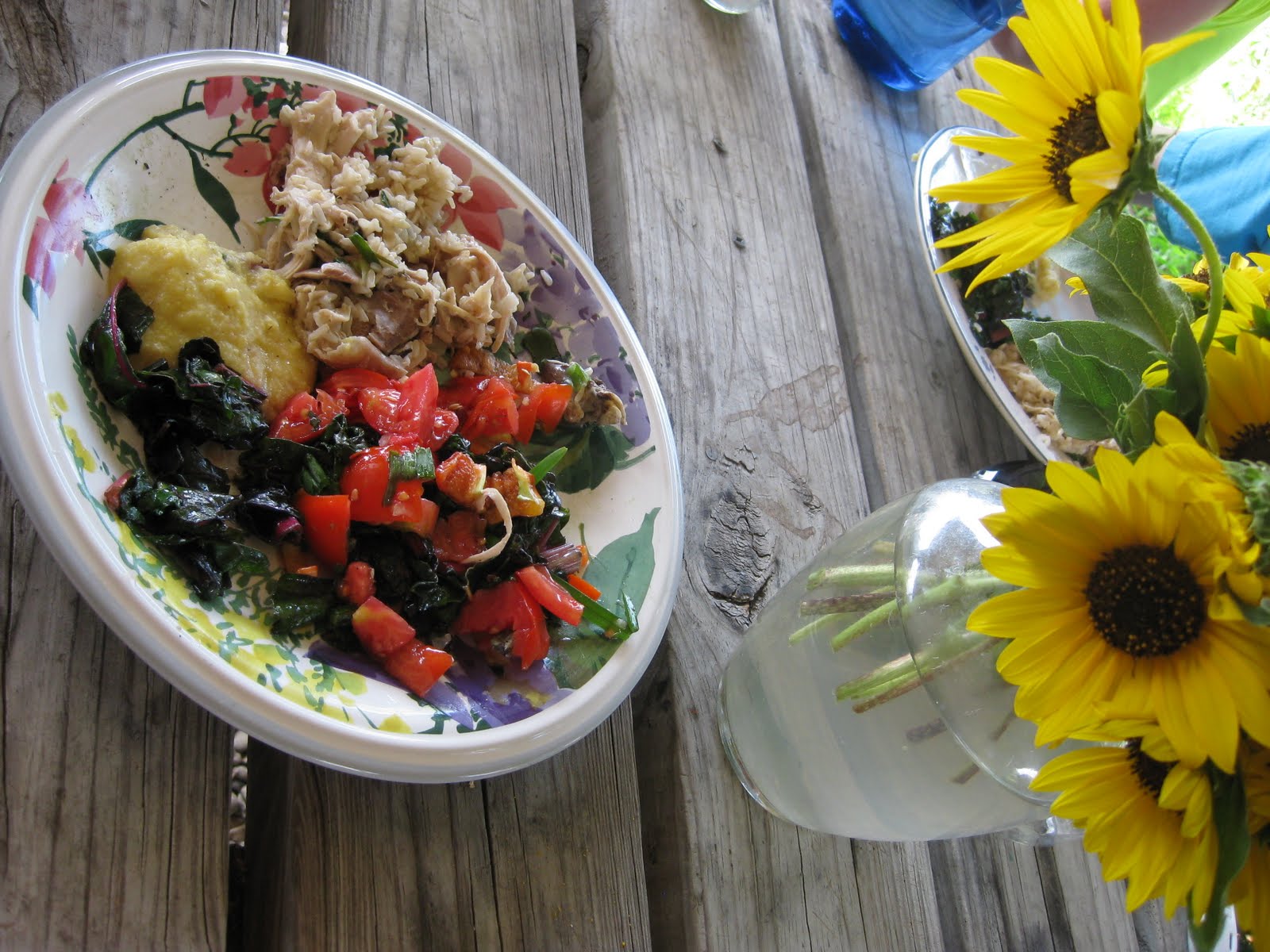
Our made-from-scratch meal at the Farm.

Day Two: Rising with the sun in time for devotions at the Farm, all are a bit slower than Day One. Yet the gals are able to drag themselves to a meeting with Beth Kilpatrick and Jeremy Everett of the Texas Hunger Initiative – aiming to end hunger in Texas by 2015 through collaborative community organizing. Jeremy shared about the role of grassroots organizing hand-in-hand with political advocacy in ending hunger in communities – while highlighting Gospel passages to inform the work we do. Beth also shared a clip from Rush Limbaugh and his comments about the federal Summer Feeding Program which provides a free meal to youth ages 18 and under, covering the gap in the free and reduced lunch program that continues throughout the school year. Please listen to the clip – and share your own comments.

Summer meal site in East Waco.

After those parting words from Rush, Jeremy and Beth, we ventured to Wesley United Methodist Church in East Waco to experience a summer feeding site firsthand. We met with Reverend Valda Jean Combs and a representative from the Waco ISD Nutrition Program. Waco is a unique place when it comes to summer feeding – Waco ISD writes the program into the budget, ensuring that a number of trained cafeteria workers are employed throughout summer to deliver hot meals to the summer feeding sites throughout the city. Host sites need only open their doors. Wesley UMC is unique in that Reverend Valda has organized a summer day camp in addition to providing transportation to the church. In an effort to encourage families to eat together, the McLennan County Hunger Coalition subsidizes adults to eat with their children.

Hot lunch provided by Waco ISD at Summer Feeding Site.

From Wesley UMC, we met with Phylixcia Moore and her uncle Vernon Clark to discuss the role of urban agriculture in providing healthy, nutritious food in communities experiencing supermarket redlining as well as increased rates of diabetes, heart disease and high blood pressure. Phylixcia is now a sophomore at Prairie View A&M studying agriculture. While in high school, she headed the garden at Carver Park Baptist Church in East Waco, selling produce to the church for community meals as well as donating to food pantries. After Phylixcia had shared her story, her uncle Vernon asked a large question of the Go Now gals: How is the work you are doing and seeing maintaining poverty or attempting to resolve it? This question helped frame a number of the projects we were to encounter on the road.

From East Waco, we trekked to a variety of gardens throughout Waco – at churches and at schools – as I, Bethel, shared about my work as an agrarian social worker with the Heart of Texas Urban Gardening Coalition. We stopped at Homestead Heritage, another Christian farm in the area, for ice cream (my favorite being sorghum pecan) before heading back to the Farm to make pizza with farm fresh ingredients and resting before hitting the road to Lubbock.

Making pesto for pizza with fresh-gathered basil.

End Day Two. End Part One.

Tuesday, May 11, 2010

Don't explode your brain

This post was originally published at Yellow Inkling.

I had a great discussion with our current Service Learning group about what can practically be done – by you and I - about poverty in this world. But wait – what’s a Service Learning group?

P4300855 At World Hunger Relief, we host several Service Learning groups a year. Part of the mission of the Farm is to “educate those with an economic abundance on methods of conserving and sharing resources.” Our Service Learning program, along with our fun-filled (and rabbit poop, worm, goat, chicken, garden-filled) Farm tours, and sending farmers off the Farm to speak, are ways we do this in our community. And...surprise! One of my main jobs here on the Farm is to manage all three of these education programs.

Our Service Learning groups come from schools, churches, families, and universities. They stay for varying lengths, from 8 hours up to two weeks. During Spring Break time (March-April) we are super busy with several Alternative Spring Break groups from colleges around the country.

Right now we have a National Summer Service Team from University of Michigan on the Farm. They’re one of our longer- staying groups just a day shy of two weeks. They’ve been an ideal group and I’ve really enjoyed getting to know them.

Last night I hosted one of my favorite Service Learning activities for them – Hunger Meal. The activity includes a meal, a presentation, and a discussion at the end. At the beginning, each participant chooses a life situation card. The card includes a name, country of residence, income bracket, and a short description of daily life – struggles, work, family, etc. Each participant is then fed according to the card they randomly picked.

I try to schedule this activity after a hard day’s work and the groups are asked not to snack between lunch and the activity which typically takes place during the evening. The “high-income” people are seated at the table with a ridiculous amount of food, usually including a balanced meal with meat, several beverage selections, and dessert. “Middle-income” participants are seated in a chair and are given beans and rice in a bowl with a spoon and a glass of water. “Low-income” participants are seated on the ground and given a large pot of rice to share amongst themselves, along with glasses of “dirty water” (water colored light brown with a splash of coffee or tea). It usually breaks down to about 15% of the group being high-income, 25% middle-income, and 60% low-income.

While the participants eat, they share their cards and I present current statistics and issues regarding world hunger and poverty.

In all honesty, although this is my favorite Service Learning activity to lead, it’s a difficult one. It’s difficult to talk about hunger and poverty in regards to statistics and generalities. In fact, in the past, I’ve often avoided talking about these problems because I didn’t know of a good way without mentioning the often sterile and meaningless statistics. But after first learning how to lead this activity I realized something – some people have never heard these statistics; they might know that there are hungry people in the world, but they don’t realize that it’s a sixth of earth’s population. I’ve learned that it’s okay to start with: currently, there are 1.6 billion people living on less than $2 a day – 900 million people in this world go hungry every day.

I say this to people who, at this point in the day, are very hungry themselves, given a handful of rice after a many hours of hard work. Then, I move closer to home – Texas is the second hungriest state in the Union – 15% of people living in Texas go hungry every day. After presenting the dry facts (that may be less dry with rumbling stomachs), I share what the Farm is doing and what they can do themselves. Last night we had a great discussion about this.

The issue was this: what can we practically do about poverty in the world? The problem is a big one and if we were to think about all the complexities at the same time and worry about and try to solve all of them, our heads would explode our pink brains everywhere. Instead, we discussed a few important steps. If you are wondering about what you can do, read on. This is what we came up with.

  1. Education – educate yourself about what’s going on. Familiarize yourself with some statistics. I told the group last night that they were in fact doing something about poverty and hunger by taking that first step: coming to the farm and learning about what’s going on in Waco, Texas, our country, and the world. You can start with our links. Quick intros like 12 Myths About World Hunger are also a good start.
  2. P3150781People – surround yourself with like-minded people, people who care about these issues and want to learn more, too. They don’t have to have the same ideas as you – in fact, the purpose of finding like-minded people is to learn from them and share perspectives, while also being encouraged. This was one of the reasons why I wanted to come to the Farm. These people are everywhere – your school, your church, maybe your family, your friends (exhibit A: the lovely specimens pictured above.) There may be groups near you that are already meeting and doing something (think Texas Hunger Initiative, McLennan County Hunger Coalition, Heart of Texas Urban Gardening Coalition, etc).
  3. Resources and Your One Thing – As people that live in America, we have to start looking at where we are putting our resources. This is often the hardest step. Even those who don’t consider themselves “rich” have enormous amounts of resources (money, time, influences). As we talked about this last step, we decided that the best way to handle this is to start small. Pick one part of your life to examine. A few years ago, when James and I first started looking specifically at the issue of hunger and how it relates to the food system, we decided to pick one thing to change.
P9100078 I started with my eggs. We eat a lot of eggs and I knew that most of the eggs sold in grocery stores were produced by chickens that were abused, pumped full of grain (which could be used elsewhere) and antibiotics, and cared for by people who are often abused themselves by employers. And so we concentrated on eggs: just finding a supplier for eggs that I knew, either through friends or the farmer’s market, or even getting a few of my own chickens. After we did that, we went on to milk, then meat. But we took it one thing at a time. And yes, sometimes that one thing took six months to solve, find, or incorporate into our lives. But since we did gradually, it didn’t make our brains go ka-boom-splat.

Maybe you drink an insane amount of coffee – maybe that could be your “one thing.” Take time and find out where your coffee comes from. With coffee being one of the biggest reasons why modern slavery exists, you could take some time and find a Fair Trade supplier or talk to your local coffee shop owner about serving Fair Trade coffee.

Fair trade net-logo Fair_Trade_Federation_Logo Transfair-usa-logo

So, go! I release you from this ridiculously long blog post. Go learn and educate – go find those like-minded people (come to the Farm!) – and find and start with your one thing.

Oh, and if you get stuck, drop us a line at the Farm.

(Maybe your thing is Vodka? Solved. Ha.)

Thursday, December 18, 2008

Life on the farm...


For those of you who've been to the farm, you know that it is much more than a place where vegetables are grown and goats are milked. The farm is an intentional community. It is a home for twenty or so people. It is a place to learn, a place to grow, a place to find beauty in the broken world in which we live.


I've lived at the farm for quite some time. I've seen people come and I've seen people go. The community is ever changing and yet always the same. There are always AMAZING people at the farm. People that make you laugh, people that challenge you, people to learn from, people to share life with...

I've been thinking about the farm quite a bit as I sit here thousands of miles away visiting my family for Christmas. I started thinking of all the things that make the farm home.

- the 100 steps it takes to get to work in the morning
- filtering goats milk while watching the sun rise
- eating lunch with twenty or so friends, whom you now consider family, every day
- talking about poop while eating lunch
- the sound of fresh goat milk hitting the bottom of an empty stainless steel pail
- sleeping in and still getting up before eight
- eating fresh organic local produce that you helped grow everyday
- Tuesday harvest
- morning devotions
- talking to goats
- sitting around with a bunch of people in the evening, each reading their own book and yet still feeling a sense of community
- making ice cream
- drinking out of jars
- hugs, smiles, and laughter from the youngest members of our community
- trying to figure out how many times one walks up the farm lane in a given week
- knowing that if you make muffins or cookies or brownies, twelve other people will gladly help you eat them
- talking about poop while eating diner
- the daily search for the newspaper in the drainage ditch
- trace minerals and the song that goes with them
- begin able to ask fifteen people for help when you get stuck on a crossword clue
- the almost weekly "Hot and Ready" that appears on the counter in the dorm
- going around the table and having everyone introduce themselves
- the sound of a rooster crowning coming from your roommates alarm clock
- the exhilaration of leaving the warmth of your bed and stepping onto the cold concrete floor in morning
- soup of every kind
- the smell of dirt and grease
- cooking for twenty and not thinking anything of it
- farm fresh eggs
- trying to find my bed in the dark without waking anyone up or tripping over my own mess
- the Waco Trib's headlines
- pulling into the farm and knowing who is around by the cars parked outside the dorm
- the six steps it takes to get to the throne, which is the Nannies composting toilet
- the many sounds of Lolita
- the farm's traveling minstrel playing "Wagon Wheel"
- running down the stairs to get the mail because the mail lady is sitting in her car honking the horn
- warm hugs from good friends
- spontaneous community breakfasts
- Friday morning hymn sings
- delicious Ghanaian Bofrotu
- fresh bread
- sitting around and talking about anything and everything
- my favorite sound in the world - the sound of the t-post driver driving a t-post into the ground
- our buck, Rasputin, and his yellow legs

Friday, May 16, 2008

Chicks and Goat Kids

Hey all you fine folk out there! I wanted to let you all know of some opportunities to take home a bit of the farm with you to your very own home!

Goat Kids for sale!!

...Remember that blog back in February about all the kids who were born?!
They are all weaned now, being over 3 months old and we want to sell them!

~ Does: $50
~ Wethers (boys): $40
~ Also 1-yr-old Wethers: $70 (these are quite a bit bigger, 60-80lbs)

They are a fine looking bunch and weigh in around 40 lbs. each, give or take. So, if you have a piece of land and need an animal to keep down the brush, want to raise a doe that can be a future milker, have a palate for goat, or any number of other things, come take a look, give us a call, or email Jocelyne at the farm's livestock address (can be found here.)

Chicks for sale!!

We have a bunch of chicks that were incubated by local school children in their classrooms. If you want to start raising your own chickens for eggs rather than buy them at the store, come and see our selection! We have some ranging from newborn to 3 months old.

~ Chicks: $3 - $8 (depending on their age when you buy them)

At about 5 months old your hens will start to lay and you won't be disappointed in the superior taste of home-grown eggs over store-bought! With 2 hens you should get around 1 dozen eggs a week! They love grass, fresh water, scratching the ground to find bugs and worms, need minimal looking after, don't require much feed (mostly for a protein source), and are all-around hardy birds!