Showing posts with label Waco. Show all posts

Tuesday, July 27, 2010

Texas at the Table: Part One.

And So it Begins, with Five Fearless Feather-Pluckin’ Females:

at the Table in Waco, TX

Whilst in Waco, we – the lovely ladies of the Texas at the Table: Project Go Road Trip – harvested and gleaned both vegetables and stories with dirty-fingernail-ed farm-hands and business-suited theological-thinkers. Waco is the first stop on the Texas at the Table Road Trip to explore how people across Texas creatively address hunger in their communities – or more simply, exploring where food comes from, who gets it, and who doesn’t.
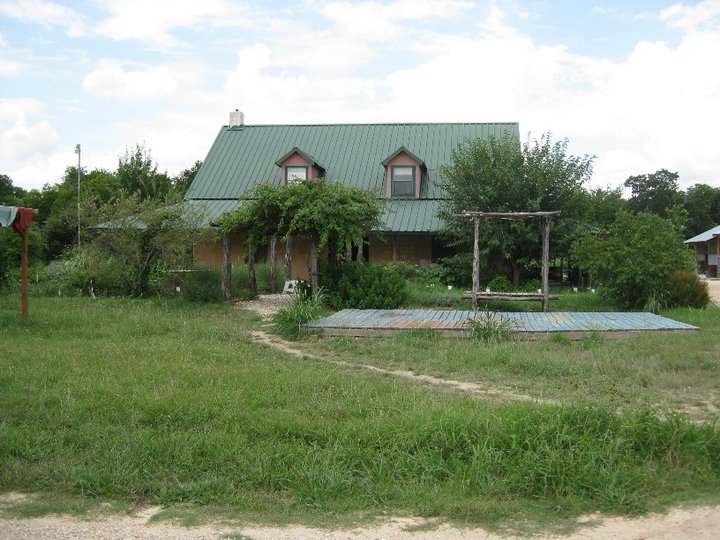
the World Hunger Relief Farm.

Day 0.5 (the evening of our first gathering – thus not the legitimate Day One in my play-book): The much arrival happens. Five fearless ladies convene – with parental units – on the World Hunger Relief Farm in Waco, TX. The parents step out of their comfortably AC-ed vehicles to be hit brazenly in the face by the Farm – the heat, the smell. Welcome. The gals are starting to question what they’ve gotten themselves into. And perhaps, so are their leaders. All meet and greet each other awkwardly. A short tour of the Farm is given – complete with instructions that this is a flush-free farm (only composting toilets) and the home they will be staying in does not have running water or electricity. Parents leave reluctantly – they have left their daughters to the care of a lady with a lip-loop and nose-ring and the other one has tattoos . . . Introductory awkwardness subsides and its dinnertime. Except that dinner must first be harvested. Kale. Swiss chard. Onions. Peppers. (Supplemented with Bethel’s peanut sauce and rice). This dinner is a strange experience (in addition to the heat and composting toilets) because: 1. These gals never really cook; and 2. They don’t ever really eat vegetables. Whataburger seems to be a staple dinner. Bethel (the leader with tattoos and braids – and also the leader with tattoos) begins to worry . . .

Sunflowers for CSA harvest at the World Hunger Relief Farm.

Day One: No rest for the weary – or the farmer. Devotions at the Farm start at 7am. Lucas Land -Truett grad and former Farm intern – leads a discussion of personal heresies and the Bible. Work chores are handed out. Most farm folks are working the CSA (Community Supported Agriculture) harvest – the Farm supplies 60 families in the Waco-area with a week’s worth of fresh vegetables for 8 months a year, on a subscription basis. CSA is just one model of direct-to-consumer farm marketing allowing farmers to know that what is planted has a home once out of the field, creating a relationship between farmers and those who eat the food the farmer grows. All that to say, the Go Now-ers jumped into harvesting bouquets of basil, counting cucumbers and eventually bundling sunflowers for shares. After moving the chickens in their portable coop-mobiles, designed to rotate the chickens to fresh pasture – which leads to eggs richer in beta-carotene and omega 3 and 6 fats, all part of a healthy, balanced diet. After a farm-family lunch, Farmer Jes talked with the gals about raw milk as the gals washed eggs freshly collected from our clucking lady-friends. The Farm manages a Grade A Raw Goat Milk dairy – containing the healthy bacteria that aids in digestion for even those who are lactose-intolerant.

the Lorena stove over which our meal was cooked.

Without a siesta, the real work for the day begins. Making dinner. From scratch. Over a wood-burning Lorena stove. Without running water. With meat that must be caught and killed before eaten. This is no simple task for five young ladies not used to cooking, let alone with modern day appliances – and in the heat of the day. Two roosters were caught by Dani and Chelsea, who were brave enough to volunteer for the slaughter.

An education in chicken butchering with farmers Lucas and Bethel.

Necks were slit (albeit with a dull knife) and the birds were bled out and plucked, while the rest of the gals gathered garden vegetables and pumped water from a well. Four hours later, a simple meal of chicken and rice with greens was prepared and placed on the table for all to eat. Delicious to all except those still smelling chicken feathers beneath their nails. With bellies brimming with fresh eats and tasty meats, the gals ended their evening with a showing of Food, Inc. – posing even more questions in already wearied and worried minds.
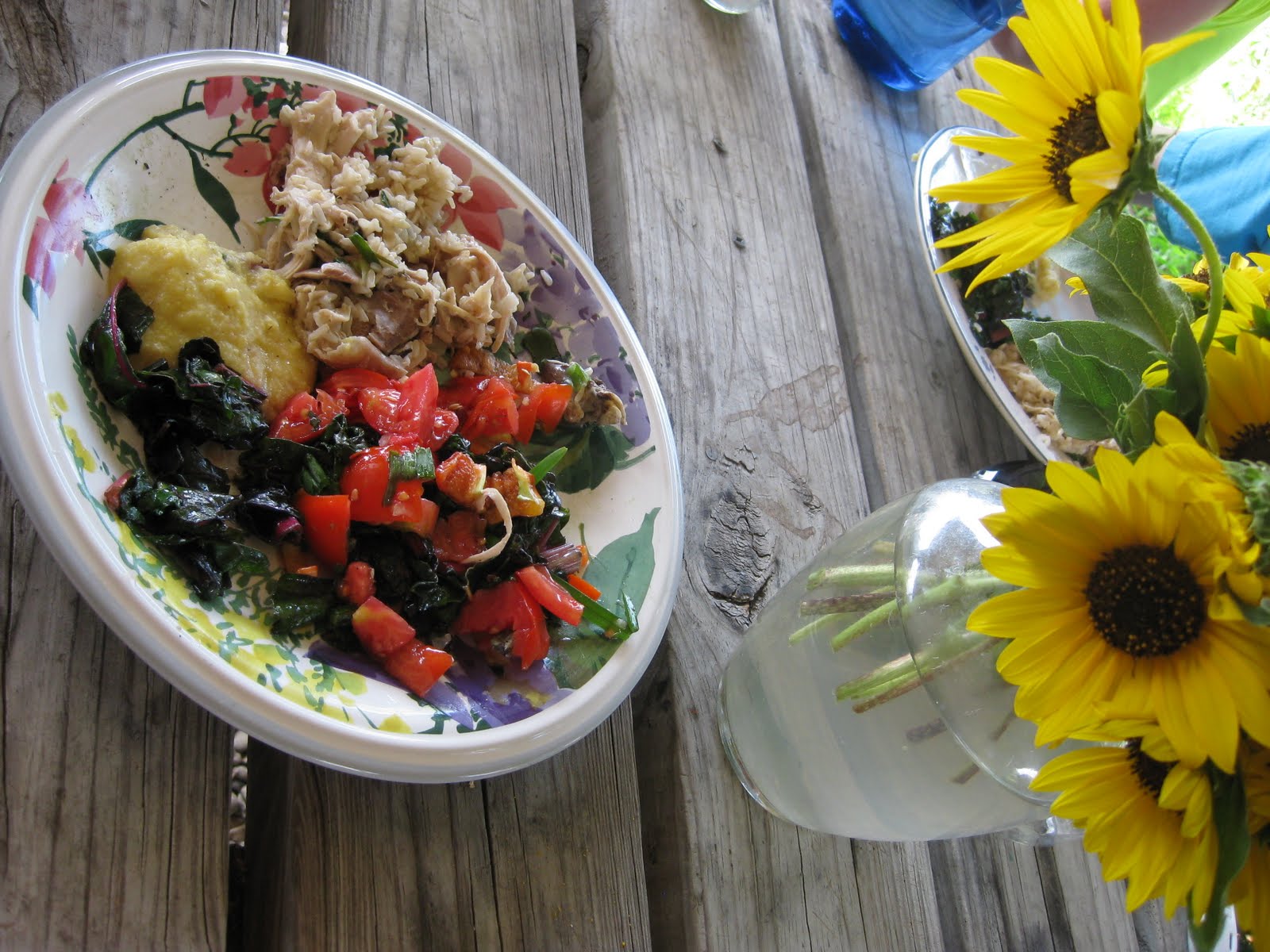
Our made-from-scratch meal at the Farm.

Day Two: Rising with the sun in time for devotions at the Farm, all are a bit slower than Day One. Yet the gals are able to drag themselves to a meeting with Beth Kilpatrick and Jeremy Everett of the Texas Hunger Initiative – aiming to end hunger in Texas by 2015 through collaborative community organizing. Jeremy shared about the role of grassroots organizing hand-in-hand with political advocacy in ending hunger in communities – while highlighting Gospel passages to inform the work we do. Beth also shared a clip from Rush Limbaugh and his comments about the federal Summer Feeding Program which provides a free meal to youth ages 18 and under, covering the gap in the free and reduced lunch program that continues throughout the school year. Please listen to the clip – and share your own comments.

Summer meal site in East Waco.

After those parting words from Rush, Jeremy and Beth, we ventured to Wesley United Methodist Church in East Waco to experience a summer feeding site firsthand. We met with Reverend Valda Jean Combs and a representative from the Waco ISD Nutrition Program. Waco is a unique place when it comes to summer feeding – Waco ISD writes the program into the budget, ensuring that a number of trained cafeteria workers are employed throughout summer to deliver hot meals to the summer feeding sites throughout the city. Host sites need only open their doors. Wesley UMC is unique in that Reverend Valda has organized a summer day camp in addition to providing transportation to the church. In an effort to encourage families to eat together, the McLennan County Hunger Coalition subsidizes adults to eat with their children.

Hot lunch provided by Waco ISD at Summer Feeding Site.

From Wesley UMC, we met with Phylixcia Moore and her uncle Vernon Clark to discuss the role of urban agriculture in providing healthy, nutritious food in communities experiencing supermarket redlining as well as increased rates of diabetes, heart disease and high blood pressure. Phylixcia is now a sophomore at Prairie View A&M studying agriculture. While in high school, she headed the garden at Carver Park Baptist Church in East Waco, selling produce to the church for community meals as well as donating to food pantries. After Phylixcia had shared her story, her uncle Vernon asked a large question of the Go Now gals: How is the work you are doing and seeing maintaining poverty or attempting to resolve it? This question helped frame a number of the projects we were to encounter on the road.

From East Waco, we trekked to a variety of gardens throughout Waco – at churches and at schools – as I, Bethel, shared about my work as an agrarian social worker with the Heart of Texas Urban Gardening Coalition. We stopped at Homestead Heritage, another Christian farm in the area, for ice cream (my favorite being sorghum pecan) before heading back to the Farm to make pizza with farm fresh ingredients and resting before hitting the road to Lubbock.

Making pesto for pizza with fresh-gathered basil.

End Day Two. End Part One.

Monday, January 18, 2010

this is what happens when they let two people who don't watch tv perform a news interview.

5:45am interview. in honor of the MLK Day of Service, sponsored by the Heart of Texas Urban Gardening Coalition. featured on KWTX’s Morning Buzz. featuring PNG’s own Melody Kakunim (former World Hunger Relief CSA intern) and some random girl in overalls and braids. full of painfully awkward, deer-caught-in-the-headlight moments. enjoy.

the Buzz – part 1.

the Buzz – part 2.

the Buzz – the story.

(sorry Dr. King . . .)

Thursday, February 5, 2009

Alumni Returns to Waco

Here is a post from the Baylor Website about a WHRI alum.


Jeremy Everett Named To Direct Texas Hunger Initiative At Baylor School Of Social Work
Feb. 4, 2009

Contact: Vicki Kabat, Baylor University School of Social Work, (254) 710-4417

Jeremy Everett will join Baylor University's Center for Family and Community Ministries (CFCM) in February to direct the Texas Hunger Initiative, a new project to alleviate hunger in the state that is being sponsored jointly by CFCM and the Christian Life Commission.

"With some organization and creativity, hunger in Texas can be alleviated, and I think we'll be well on our way to that within six years," said Everett, who earned his undergraduate degree in religion and history from Samford University and his master's of divinity degree in 2001 from Baylor's George W. Truett Theological Seminary.

The THI project comes alongside hunger ministries related to the Texas Baptist Offering for World Hunger through the Baptist General Convention of Texas, which currently provides $475,000 for 95 Texas hunger ministries. The initiative will build capacity of existing ministries that are addressing hunger in the state. Initially, the project will identify regional leaders in the state and create networks, meeting the different needs of each region.

"I appreciate that this project begins by assessing strengths, and then allows us to build upon those strengths with a model that incorporates cultural and environmental sensitivity," Everett said. "We already have a lot of great efforts to alleviate hunger in place."

Suzii Paynter, director of the BGCT's Christian Life Commission, is excited about partnering with the Baylor School of Social Work. "It's like a new harvest to have the Baylor School of Social Work as a partner to boost and nourish the network of Texas Hunger Offering ministries," Paynter said. "Great people are doing God's work caring for the 'least of these,' and this project will give them tools, support and blessing for ever greater things, especially as we focus on Texas HOPE 2010."

Everett has spent the past five years in San Antonio's West Side, a historically low-income area where he lived with his wife, Amy (MDiv/MSW, 2004) and their two children, Lucas, 4, and Sam, 2. Employed by Baptist Children and Family Services, Everett helped start Guadalupe Street Coffee, a café with computers, wireless Internet service, murals painted by local artists and meeting spaces. As a community developer in West Side, Everett worked to bring together members of the City Council, business owners, and students and administrators from the area's Sidney Lanier High School.

The coffeehouse employs an average of seven people and sponsors a variety of youth and community programs, including college assistance, art events and business development meetings. Now, $2 million in city and federal grants are slated to further economic development in and around the coffeehouse, according to an article by Abe Levy in the Jan. 24 San Antonio Express-News.

The Texas Hunger Initiative will give Everett opportunities to use his community development skills on a broader scale. Initially THI will focus on El Paso, the Valley, and Bexar and McLennan counties, seeking to develop and implement strategies to alleviate hunger through policy, education, community organizing and community development.

"We have chosen to focus on these areas first because there are existing programs and relationships," Everett said. "We can build upon the trust that is already there and grow successful partnerships."

Everett will spend the first months in his new role getting to know dedicated people who address the needs of the hungry every day and involving social work graduate students in the initiative.

"The process we'll put together for the hunger initiative is the same one I used in San Antonio, and both use social work principles," he said. "Students interested in community development and community organizing will graduate from the Baylor School of Social Work with direct practice experience gained through this initiative."

Baylor's School of Social Work began a concentration in community development this past year, and students already have been effective in a specific community building effort to alleviate hunger. The fall 2008 practice class researched, organized, chartered and began a Campus Kitchen, based on the national program in Washington, D.C. Now a part of Baylor's Student Life Division, the kitchen will retrieve unused, quality food from campus dining providers, local restaurants and grocery stores, and feed nonprofit groups and to local service agencies this spring.

In addition, the CFCM has researched and written original curriculum titled "Understanding Poverty," that now is being tested in congregations before final publication.

"We have found that churches are nearly begging for resources to help them address community needs," said Dr. Jon Singletary, CFCM and assistant professor at Baylor's School of Social Work. "We will continue to develop a curriculum on poverty to present to churches and civic groups as a way to introduce and prepare them to engage impoverished families in their communities."

The initial three-year funding of $100,000 annually for the THI will come from grants, gifts and BGCT sources. Everett will be located at the CFCM in Baylor's School of Social Work.

"Feeding hungry people and developing communities so that families can afford to feed themselves - that's what Jesus called us to do," said Dr. Diana Garland, dean of the Baylor School of Social Work. "I am thrilled we will be working with the Christian Life Commission of the BGCT to help congregations bring an end to hunger and the poverty that creates hunger in their communities."

Thursday, December 18, 2008

Life on the farm...


For those of you who've been to the farm, you know that it is much more than a place where vegetables are grown and goats are milked. The farm is an intentional community. It is a home for twenty or so people. It is a place to learn, a place to grow, a place to find beauty in the broken world in which we live.


I've lived at the farm for quite some time. I've seen people come and I've seen people go. The community is ever changing and yet always the same. There are always AMAZING people at the farm. People that make you laugh, people that challenge you, people to learn from, people to share life with...

I've been thinking about the farm quite a bit as I sit here thousands of miles away visiting my family for Christmas. I started thinking of all the things that make the farm home.

- the 100 steps it takes to get to work in the morning
- filtering goats milk while watching the sun rise
- eating lunch with twenty or so friends, whom you now consider family, every day
- talking about poop while eating lunch
- the sound of fresh goat milk hitting the bottom of an empty stainless steel pail
- sleeping in and still getting up before eight
- eating fresh organic local produce that you helped grow everyday
- Tuesday harvest
- morning devotions
- talking to goats
- sitting around with a bunch of people in the evening, each reading their own book and yet still feeling a sense of community
- making ice cream
- drinking out of jars
- hugs, smiles, and laughter from the youngest members of our community
- trying to figure out how many times one walks up the farm lane in a given week
- knowing that if you make muffins or cookies or brownies, twelve other people will gladly help you eat them
- talking about poop while eating diner
- the daily search for the newspaper in the drainage ditch
- trace minerals and the song that goes with them
- begin able to ask fifteen people for help when you get stuck on a crossword clue
- the almost weekly "Hot and Ready" that appears on the counter in the dorm
- going around the table and having everyone introduce themselves
- the sound of a rooster crowning coming from your roommates alarm clock
- the exhilaration of leaving the warmth of your bed and stepping onto the cold concrete floor in morning
- soup of every kind
- the smell of dirt and grease
- cooking for twenty and not thinking anything of it
- farm fresh eggs
- trying to find my bed in the dark without waking anyone up or tripping over my own mess
- the Waco Trib's headlines
- pulling into the farm and knowing who is around by the cars parked outside the dorm
- the six steps it takes to get to the throne, which is the Nannies composting toilet
- the many sounds of Lolita
- the farm's traveling minstrel playing "Wagon Wheel"
- running down the stairs to get the mail because the mail lady is sitting in her car honking the horn
- warm hugs from good friends
- spontaneous community breakfasts
- Friday morning hymn sings
- delicious Ghanaian Bofrotu
- fresh bread
- sitting around and talking about anything and everything
- my favorite sound in the world - the sound of the t-post driver driving a t-post into the ground
- our buck, Rasputin, and his yellow legs

Wednesday, September 3, 2008

World Hunger Relief and Fair Trade

Sustainable farming is more than nutrition and practices for growing food, but a balance between making food affordable while also paying farmers enough to sustain a healthy standard of living. That is why World Hunger Relief is involved in trade policy and running a fair trade store at the farm.

When a
ll trade regulation is stripped away under free trade, the only thing left to determine what we buy is quality of product and price. The companies who are more profitable are largely the companies that skimp on costs of production, making their product cheaper. Successful companies generally skimp on worker wages, raise work hours and disregard the environment. Employment is moving to places like China where there are less human rights. Correspondingly, deficits for developed counties with good labor laws are growing under free trade.

Legislatively, this is not to disregard a need for a market, but to suggest that, as countries, we need to regulate the market to ensure higher trade standards and balanced budgets. Just as rules in sports ensure healthy competitions, so can rules in trade offer competition around strong minimum wages, benefits, etc. It is your right to
have a say in these rules as a citizen.

As individuals we need to consume fairly traded products. Fair trade is
a socially, environmentally, and economically sustainable alternative. Fair trade might cost more, but for most of us getting enough is not the question, but rather enjoying what we have and acquiring what we consume in ways that bring justice and peace into our world.

So where do I go from here:

1. Support Local and National business.

2. Support Cooperatives and Union Made.


3. Support Fair Trade.

4. Support Micro-Credit
as a way of developing small businesses rather than international corporations. Please visit Kiva - loans that change lives & The Grameen Foundation.

5. Sign our petition for fair trade bananas at HEB. Commit to pay up to 99 cents/lb for fair trade bananas in trying to encourage HEB to carry fair trade bananas.

6. Recognize that from banana wars to oil wars, things have not changed. Half your tax dollars are spent on the military. The US spends more than the rest of the world combined on the military. The best way to keep America safe is to stop fuelling hatred. The best way to support your troops is to bring them home.

7. Support fairer trade legislation and higher labor standards as an alternative to free trade with your vote. You can have the market while competing between agreed o
n living wages, environmental standards, etc.

8. Support International law and institutions with your vote and demand it of your Leaders. Part of being a democratic nation and supporting democracy worldwide is being a nation among other nations by respecting international democratic opinion and law.

9. Finally advocate for publicly funded elections. It would cost a dollar a person to have elections funded publicly. Right now they are funded by your corporations and so they answer to them, and not you. All it would take to have a President and Congress that answer to you is one dollar.

10. Talk to your neighbor about fair trade!!

Fair Trade in Waco

The Village Store at World Hunger Relief
- Coffee, Tea (loose leaf and bagged), chocolate, cocoa, almonds, cranberries, as well as a variety of kitchen and housewares, clothing, handmade artwork, bags, scarves, jewelry, and instruments, etc.
356 Spring Lake Rd, Waco, TX 76705
254-799-5611
Open 9-5 Mon-Fri, Sat 10-3


The World Cup Café
- Coffee, and a variety of kitchen and house wares, clothing, handmade artwork, ba
gs, scarves, and jewelry
Corner of 15th and Colcord
254-757-1548
Open 7-5 Mon-Fri

HEB @ Wooded Acres

- Coffee, Tea (loose leaf and bagged), Dr Bronner’s Soap, Sugar, Molasses as well as some World of Good Handcrafts.

Drug Emporium
-
Coffee, Tea (bagged and in liquid concentrate for Chai Latte’s), chocolate chips, Vanilla, Sugar, Dr Bronner’s Soap
5900 Bosque Blvd

Connor Health Foods Inc
- Dr Bronner’s Soap, Sugar, and Tea.
2625 W Waco Dr

Wal-Mart
- Coffee