Showing posts with label Hunger. Show all posts

Wednesday, August 4, 2010

Texas at the Table: Part Four.

Preservative Pickles, Cardboard Apples, and the Theology of Disposable Dishware

at the Table in San Antonio, TX

While surveying the sights in San Antonio, we – the lovely ladies of the Texas at the Table: Project Go Road Trip – experienced the full spectrum of emotion – from shock and awe, disillusionment and hope. We discovered new insights into everyday theology – through eating red delicious apples and washing mismatched dishes. San Antonio was the fourth stop on the Texas at the Table Road Trip to explore how people across Texas creatively address hunger in their communities – or more simply, exploring where food comes from, who gets it, and who doesn’t.

Day Ten: After basking in the sun for an afternoon and unwinding in a cabin in the hill country, we dove back into summer feeding frenzy in San Antonio. Our first stop was Baptist Temple Church to meet with Pastor Jorge Zayasbazan. Baptist Temple was one of the first churches in San Antonio to initiate a summer lunch program for neighborhood children. In their second summer, Baptist Temple now hosts summer camp five days a week, providing programming for kids all morning long and ending with a lunch. In San Antonio, the summer lunch program is sponsored by the San Antonio Food Bank to coordinate the food distributed to the various lunch sites across the city. Pastor Jorge led us through the kitchen to show us a bagged lunch prepared by the Food Bank – a hot dog wiener, pickle-in-a-pouch, fruit cocktail, and fruit cereal bar. If enough time and hands are available, the hot dogs will be heated up in the microwave before served to the children in a white bun. My fellow Road Trippers – already having their fill of hot dogs – were aghast at the nutritional deficiency of said meal. And yet such meals meet the US Department of Agriculture’s nutritional standards of a healthy meal.

the beautiful San Antonio Food Bank.

From Baptist Temple, we jumped in the cars, stuffed some carrots, cucumbers and hummus in our mouths and headed towards the San Antonio Food Bank to meet with Paco Velez, Director of Services – to take a tour of the city programs with which the Food Bank partners. First stop, a neighborhood center summer program for teens. This program was co-sponsored with HEB and Radio Disney. When we walked through the doors, we were hit with the smell of sweaty adolescence, or should I say, teen spirit. Radio Disney led dancing-jazzercise wonderful-ness with the teens. The HEB mascot handed out apples. The overall focus of the program is health and fitness. I spoiled the good vibes by politely declining the offer of an apple, because personally, I think red delicious apples taste like cardboard – and out of all the hundreds varieties of apples, I have no idea why we as a culture have adapted the red delicious apple as the apple of choice. If I were a teacher and a student of mine handed me a red delicious apple, I would promptly compost it. Perhaps this is a bit harsh, but food grown for artificial appearances preserved to have a shelf-life of 6 months should not be considered edible. Chemicals are used to keep the food-product looking fresh, while the sugar content (ie flavor) begins to deteriorate the moment it is plucked from the branch. This is not food. And this is why our children do not eat their vegetables. Or red delicious apples. Or fruit infused-in-high-fructose-corn-syrup cocktail. And also a contributing factor to the increasing rate of adult-onset diabetes and obesity amongst our children. Excuse my rant.

Teen Center partnering with San Antonio Food Bank.

After the youth center, Paco took us to a senior center distributing senior food boxes in addition to what the social worker side of me chooses to refer to as the diabetes line – donations from HEB of all the day-old pastries, cakes, cookies, breads. Don’t get me wrong – I truly appreciate attempts to salvage food from waste (and am an avid dumpster diver of groceries and used to rescue hundreds of $$$ worth of fresh produce from my local Trader Joe’s) – however, as a former case manager for low-income and homeless families, it pains me to see people who have lost their sight, toes, or whole legs to diabetes reaching for that free cake donated by HEB. Let them eat cake, indeed! If we want to adequately fix our broken health care system while attempting to end hunger in our communities, we must understand and emphasize the importance of good nutritious food. A shift must occur socially and culturally. Those of us from higher economic brackets who prefer fresh organic food – be it from HEB, Central Market or Whole Foods – musn’t reach for the can of creamed corn and bag of ramen noodles that we wouldn’t feed ourselves or our children when the next food drive for the church food pantry hits us in the face. If we have respect for our own bodies and own health – as well as that of our children – then as Christians (if we claim to believe in God and the words Jesus said to love our neighbors as ourselves) we must also respect the health and well-being of our brothers and sisters we serve at food pantries, on the street, at work, next door. Excuse my rant.

Filling a food box at a senior center.

Next stop: one of the Food Bank’s drive-thru food box distribution sites. Typically the Food Bank requires that a parking lot can accommodate 500 cars in order to qualify as a site. The site is complete with canopies covering everything from potatoes to beverages to rice and more is hand-loaded by Food Bank employees into the trunks and backseats of those willing to sit idling in the parking lot. Qualifications: folks must have a child under 18, call ahead to the Food Bank to reserve a box, and be willing to take the time in the morning or afternoon to wait in line. Such a food distribution presupposes transportation and gas money.

Drive-thru food box distribution.

Our last stop before heading back to the Food Bank was the infamous Haven for Hope, a multi-million dollar response to homelessness in San Angelo. As our friend Steven from Austin explained, Haven for Hope is the Walmart of the social service world: one stop shopping for the homelessness community, providing a multitude of programs and gated community setting – and slowing putting smaller homeless assistance programs out of business with the consolidation of funding and services focused on Haven for Hope. The Food Bank’s role at Haven for Hope is food, of course, as well as a Culinary Arts Training Program – allowing residents to participate in a job-readiness program. We benefited from some of the program’s red velvet cake.

Looking at aspargus at the Food Bank Garden.

Finally, the Food Bank operates a garden on the site of the main headquarters. I led the gals for a plant identification tour – testing their increased knowledge of various vegetables and herbs. Upon asking Paco about the Food Bank’s sourcing of fresh produce, he told me they work with one of the largest produce warehouses in the state of Texas – which donates millions of pounds of vegetables and fruit each year. The Food Bank also encourages community partners to start their own gardens, providing seeds and tools to help get their gardens started.

the Lovely Ladies with Paco.

That evening we had a terrifying experience had an HEB-plus on the south side of the city. I would also like to comment that any and all of my rants are not against the San Antonio Food Bank specifically. The SAFB is one of the best food banks in the nation, distributing large amounts of food to those in their community who need that extra support. They do good work. However, I am continually frustrated when efforts to address hunger in the community are haphazardly bandaged through quick fixes of food-products devoid of nutritional value – while the plight of the family farmer is furthered by our societal reliance upon agri-business and corporate conglomeration of our food system. Seems like there should be a solution in there some where to connect the idea of growing food with the issue of ending hunger, while economically benefiting small growers and the local community at the same time . . . Excuse my rant.


Day Eleven: Friday morning our view of San Antonio – and the entire trip – shifted. Rather than continuing to see refined programs tailored to look good in funding pamphlets, we saw down and dirty service to community. We metwith Dee Sanchez, volunteer at the San Antonio Catholic Worker House – who, first things first, led us in a devotion centered on Matthew 25, integrating Jesus’ message into the work of the Catholic Worker house – feeding the hunger, providing shelter to the homeless, doing laundry, sharing conversation, sharing coffee, etc. The Catholic Worker Movement started many moons ago when a fiesty young woman – Dorothy Day – and simple agrarian-minded man – Peter Maurin – frustrated by the Church, decided to become the hands and feet of Christ through inner-city and agricultural hospitality. Today many Catholic Worker Houses are scattered across the country, continuing in the fiesty agrarian spirit of Dorothy and Peter. We Road Trippers truly felt that all who entered this old house were truly welcome. We spent the morning in the crowded kitchen of the house preparing lunch for whomever might show up. Potatoes were chopped, boiled and mashed. Donations of meat from a local rib joint were brought in. Herbs gathered from the garden. Vegetables chopped for salad. Peaches prepped for peach cobbler. Men wandered in and out, grabbing a hot cup of coffee on this 100-plus degree day. Folks came in to sign up for the laundry list. Some wanted to look through the clothing closet. Others volunteered to wash dishes. All was chaos – clanging of plates, swapping of stories – 50 at one time, sweaty bodies huddled over the chopping block. And yet through the chaos of it all – we loved it. Rather than receive food and donations from the San Antonio Food Bank or applying for government funding, the Catholic Worker House relies on donations from charitable folks in the community, praying God will provide day by day.

the San Antonio Catholic Worker House.

While preparing the meal, we heard stories of people on the streets. Some struggling to get into Haven for Hope and expressing their frustration with the lack of transparency of the program. Neither of the two claimed to do drugs, struggle with alcohol or have a history of abuse – which are key issues for getting a bed quickly at Haven for Hope. Rather they are the in-betweens, sleeping outside huddled against the building. They are allowed to take showers – but the stalls are only half-height and the toilets have no doors. Lunch is a cold sandwich in a brown bag. This couple has fallen through the cracks, like many other folks we meet – and this is where the Catholic Worker House opens its doors. For those who fall through the cracks. A hot meal is provided – with mashed potatoes, made from real potatoes, not off-brand flakes. And the dishes are real, not disposable. Another pet peeve of mine – disposable dishes. And not for the eco-elite reason of not being environmentally sustainable – but because of dignity. You would wash dishes for your family . . . If we serve people disposable food on disposable dishes, soon people begin to understand themselves as disposable people.

We served over 100 people for lunch that day – without air conditioning, without a dishwashing machine, without the Food Bank, without the government. As Dee said, “Love in Reality is a harsh and dreadful thing as compared to the Love in Dreams.” After cleaning up, we were plumb tuckered out and went back to our apartment at Baptist University of the Americas – and order a pizza from our local Pizza Hut . . .

Pearl Brewery Farmers Market.

Day Twelve: A more relaxed day. Drove to the Farmers Market at Pearl Brewery, where we bought some vegetables, sniffed some lavender, and browsed some books. Then we traipsed through Whole Foods – a first for the gals. So I gave them my Whole Foods plan of action – walk the perimeter and look for free food samples; walk the interior for free food samples; and walk the perimeter once more for free food samples. I also pointed out the Diva Cup – which I won’t get into here – but I had already given my 2-cents worth about being more sustainable during that time of the month. We ate lunch at Whole Foods before the gals scampered off to play sand volleyball in the scorching hot sun, with the two German Brethren volunteers we met at the Catholic worker house the day prior. Then we met up for dinner at Casa Rio and perused the River Walk, on the prowl for adventure. Finding none, we went home for a good night’s sleep before our drive to the Valley.

the San Antonio Riverwalk.

End Day Twelve. End Part Four.

Monday, August 2, 2010

Texas at the Table: Part Three.

From the Garden of Eden to Utopia

at the Table in San Angelo, TX

When in San Angelo, we – the lovely ladies of the Texas at the Table: Project Go Road Trip – saw the service of many churches and community folks coming together to meet the needs of their neighbors. San Angelo was the third stop on the Texas at the Table Road Trip to explore how people across Texas creatively address hunger in their communities – or more simply, exploring where food comes from, who gets it, and who doesn’t.

WIC accepted at the Concho Valley Farmers Market.

Day Six (the evening): Arrival in San Angelo. Jumping in head-first, our first stop on Sunday evening was Southland Baptist Church, home-base for much of the San Angelo’s work with the Texas Hunger Initiative. In fact, San Angelo was targeted for our road trip largely due to the good work of Carol Rigby Hiebert and Mary Herbert with the Texas Hunger Initiative in San Angelo. Tonight’s visit entailed clean-up crew for Southland’s VBS program, after a hearty meal of hot dogs and potato chips. I, Bethel, tried discreetly to sneak in some carrots from the Downtown Art Market in Lubbock to munch on for dinner – which satisfied my initial hunger until we settled into our new home for the next couple of days at the Baptist Memorial Retirement Home. Yes, we basked in the glorious accommodations of a retirement home while in San Angelo. God and his hospitality can be quite charming.

Cowboy Bob, a real West Texan cowboy.

Day Seven: Monday morning we head to Rust Street Ministries and meet Cowboy Bob, a true West Texan cowboy. His real name is Bob Knox, also the director of Rust Street Ministries. Cowboy Bob tells us that RSM is a social service agency run out of a converted warehouse, distributing food (including fresh produce from the Garden of Eden), clothing, furniture and good cheer to all who come through the doors. First things first, our time starts with a devotion and sharing of fresh peaches, brought in by a neighbor. Next, a tour and then to work. A few of the gals stayed up front meeting with folks who came in for assistance, while the rest of us sorted clothing in the free store collection area. We were also able to scour the racks for some farm-work clothes while in McAllen – which inevitably led to much plaid and pearl-snaps as well as tattered jeans.

Lunch line at Fort Concho Kids Eat site.

Around lunchtime, we headed to historic Fort Concho for Kids Eat, a summer feeding site in San Angelo. In San Angelo, the summer lunch program is coordinated by churches in the community, not through the school district or a food bank. Volunteers from various churches join together to make sure food is freely available to all in the community – especially kids – who need it. Cowboy Bob emphasizes the necessity of an ecumenical approach towards serving community – no church can be the body of Christ alone. Rather than helping service lunch, we are free to greet and eat with kids and their families. Much to the chagrin of the Road Trippers, lunch consisted of a hot dog and beans. Two consecutive days of hot dog meals conjured up images from Food, Inc., and our time at the Farm in Waco – and more questions about the state of our food system.

at the Garden of Eden with Cowboy Bob.

After lunch, we visited the Garden of Eden, a community garden coordinated by Cowboy Bob. In its first season, the Garden of Eden was established by a plea to a local church from Cowboy Bob to start a garden – and $15,000 was raised to sow and reap. Of all the okra and melons and more grown, 50% of the produce is donated to the Rust Street Ministries to distribute to community folks. A number of folks from the neighboring low-income senior housing units help provide a good amount of labor to keep the garden growing even in the midst of the West Texas dry heat. Additional support is provided by area Master Gardeners on Monday nights, when the gardeners gather together.

Sunrise at the Conch Valley Farmers Market.

Day Eight: Another early morning. Local wisdom informed us that the Concho Valley Farmers Market sells out fast – so we had to the market opening at 7am to find fresh produce for our meal later that evening. Carol Hiebert guides us through the market, where we acquire fresh figs, peaches, red onions, sweet corn, elephant garlic, beets, bell peppers, and summer squash. I made a side purchase of amaranth seed from a lovely lady saving and selling seeds from her own garden.

at the Daily Bread Soup Kitchen.

From the Farmers Market we made our way to serve at the Daily Bread Soup Kitchen at Wesley United Methodist Church. Little did we know that we were to be the sole staff preparing the meal this noonday’s lunch. Starting with leftovers, we reheated enchiladas, greens, and rolls, then set to the task of making salad, spaghetti, and sweet tea. Daily Bread also has a relationship with the local Olive Garden, which donates extra soup. Today’s soup du jour: minestrone. No one is refused food. Seconds are freely given. Under the tutelage of hard workin’, tough lovin’ Pam, we managed to feed all who walked through the door, while pausing for a devotion and hymn-sing led by a neighbor in the midst of the lunch-feedin’ fury. Before leaving, a donation of fresh summer squash arrived from Rust Street Ministries, and we began to prep for tomorrow’s meal.

Dutch oven cookin' with Cowboy Bob.

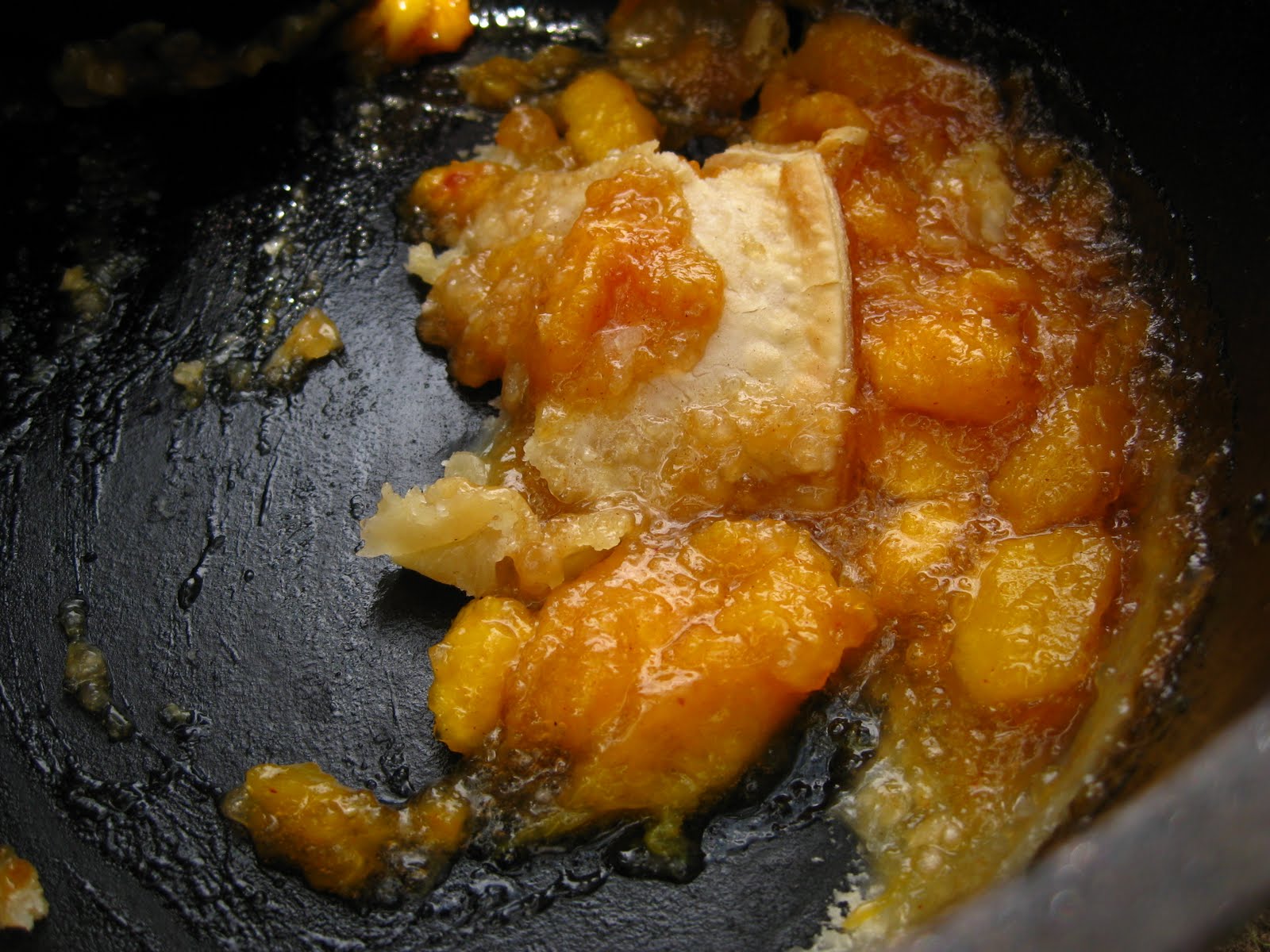
As a brief interlude, we went back to Fort Concho to meet with Cowboy Bob for a tour – and some down-home cookin’. Dutch oven peach cobbler, made in under the sweltering heat of the West Texas sun. (Interesting fact: many of the African-Americans in San Angelo are descendents of Buffalo Soldiers who defended Fort Concho).

the Finished Product: peach cobbler.

Mildly exhausted, we traveled back to the retirement home to meet with fellow residents (of the young variety), Sarah and Jeremy Boucher – former Go Now missionaries now working with Kathy Waller and her husband, Terry, who started the organization Water for All. Sarah, Jeremy and Kathy shared their stories – travels and travails – of doing the work of the Lord in many places around the world – now for Water for All, which hand-digs and installs wells for increasing access to water in small communities. When they are not in the mission field, their home-base is San Angelo, where they attempt to live simply in order to avoid debt and other pitfalls that would chain them down to comfortable American lifestyles. Instead, they hope to be free to the possibilities to serve whenever and wherever they feel God calling.

Local dinner at Carol and Tommy's.

Our final event for the day was hosted in the home of Tommy and Carol Rigby-Hiebert, gracious hosts of our time in San Angelo and members of Southland Baptist Church. The gals gathered and crafted our meal from the local fixins we picked up from the farmers market that morning, supplemented by local Mikulik sausage. Along with an education of what real food looks and tastes like, the gals were increasing in their capacity to prepare a wonderfully delicious dinner: corn on the cob, beet and beet green salad tossed in peanut sauce, onion-pepper-squash sautee, local sausage, and fresh fruit dessert of cantaloupe and yellow watermelon.

A slice of Utopia: chocolate pie at Lost Maples Cafe.

Day Nine: A good nights rest, and then we packed up for our official day-off: a trip to the hill country en route to San Antonio. We stopped for lunch in Utopia, TX, at the Lost Maples Cafe where we enjoyed slices of home-baked pies (chocolate, cherry and buttermilk), before an afternoon floating down the Frio River in Concan and an evening in a cabin at Neal’s Lodges.


End Day Nine. End Part Three.

Tuesday, July 27, 2010

Texas at the Table: Part One.

And So it Begins, with Five Fearless Feather-Pluckin’ Females:

at the Table in Waco, TX

Whilst in Waco, we – the lovely ladies of the Texas at the Table: Project Go Road Trip – harvested and gleaned both vegetables and stories with dirty-fingernail-ed farm-hands and business-suited theological-thinkers. Waco is the first stop on the Texas at the Table Road Trip to explore how people across Texas creatively address hunger in their communities – or more simply, exploring where food comes from, who gets it, and who doesn’t.

the World Hunger Relief Farm.

Day 0.5 (the evening of our first gathering – thus not the legitimate Day One in my play-book): The much arrival happens. Five fearless ladies convene – with parental units – on the World Hunger Relief Farm in Waco, TX. The parents step out of their comfortably AC-ed vehicles to be hit brazenly in the face by the Farm – the heat, the smell. Welcome. The gals are starting to question what they’ve gotten themselves into. And perhaps, so are their leaders. All meet and greet each other awkwardly. A short tour of the Farm is given – complete with instructions that this is a flush-free farm (only composting toilets) and the home they will be staying in does not have running water or electricity. Parents leave reluctantly – they have left their daughters to the care of a lady with a lip-loop and nose-ring and the other one has tattoos . . . Introductory awkwardness subsides and its dinnertime. Except that dinner must first be harvested. Kale. Swiss chard. Onions. Peppers. (Supplemented with Bethel’s peanut sauce and rice). This dinner is a strange experience (in addition to the heat and composting toilets) because: 1. These gals never really cook; and 2. They don’t ever really eat vegetables. Whataburger seems to be a staple dinner. Bethel (the leader with tattoos and braids – and also the leader with tattoos) begins to worry . . .

Sunflowers for CSA harvest at the World Hunger Relief Farm.

Day One: No rest for the weary – or the farmer. Devotions at the Farm start at 7am. Lucas Land -Truett grad and former Farm intern – leads a discussion of personal heresies and the Bible. Work chores are handed out. Most farm folks are working the CSA (Community Supported Agriculture) harvest – the Farm supplies 60 families in the Waco-area with a week’s worth of fresh vegetables for 8 months a year, on a subscription basis. CSA is just one model of direct-to-consumer farm marketing allowing farmers to know that what is planted has a home once out of the field, creating a relationship between farmers and those who eat the food the farmer grows. All that to say, the Go Now-ers jumped into harvesting bouquets of basil, counting cucumbers and eventually bundling sunflowers for shares. After moving the chickens in their portable coop-mobiles, designed to rotate the chickens to fresh pasture – which leads to eggs richer in beta-carotene and omega 3 and 6 fats, all part of a healthy, balanced diet. After a farm-family lunch, Farmer Jes talked with the gals about raw milk as the gals washed eggs freshly collected from our clucking lady-friends. The Farm manages a Grade A Raw Goat Milk dairy – containing the healthy bacteria that aids in digestion for even those who are lactose-intolerant.

the Lorena stove over which our meal was cooked.

Without a siesta, the real work for the day begins. Making dinner. From scratch. Over a wood-burning Lorena stove. Without running water. With meat that must be caught and killed before eaten. This is no simple task for five young ladies not used to cooking, let alone with modern day appliances – and in the heat of the day. Two roosters were caught by Dani and Chelsea, who were brave enough to volunteer for the slaughter.

An education in chicken butchering with farmers Lucas and Bethel.

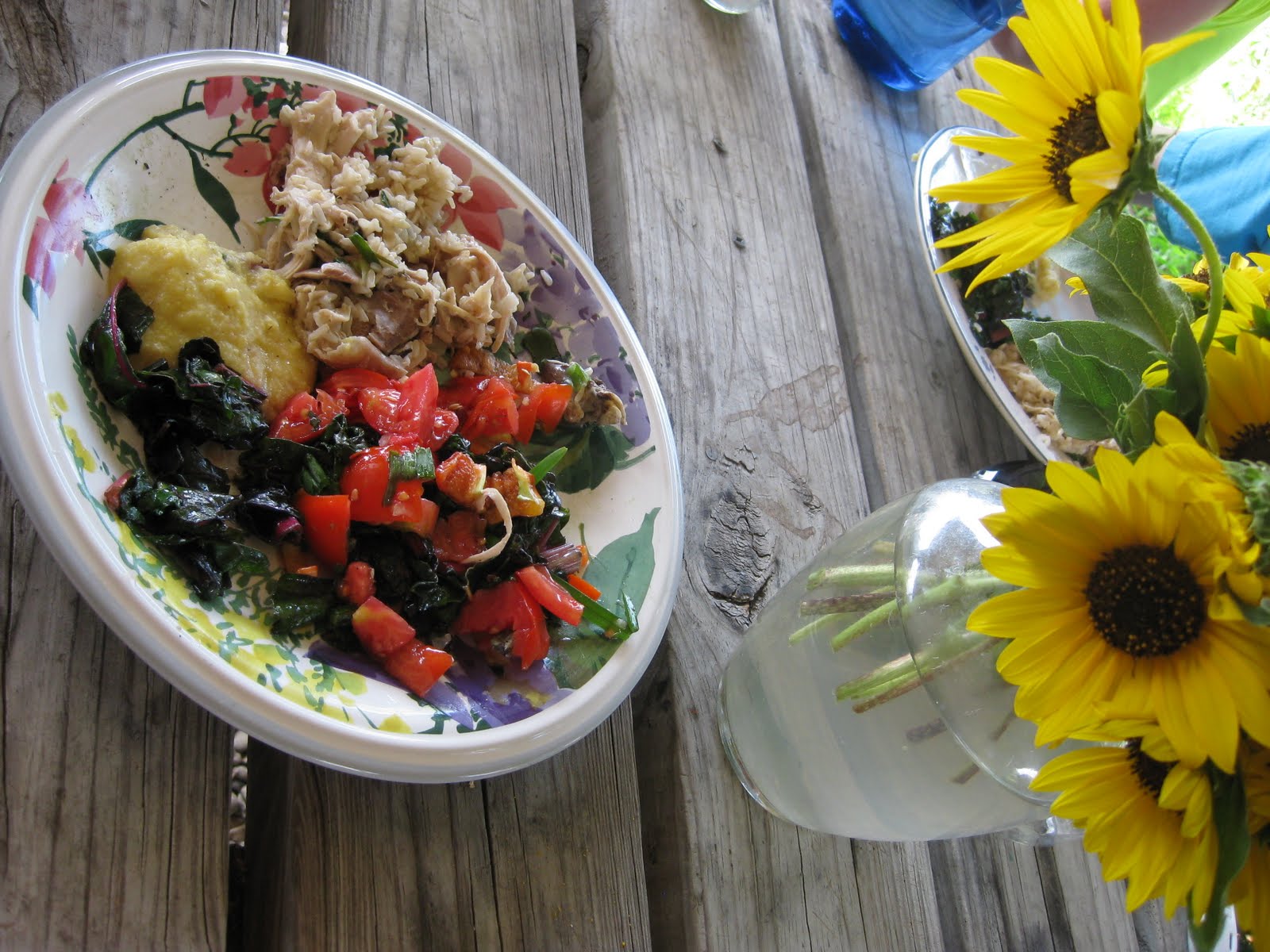
Necks were slit (albeit with a dull knife) and the birds were bled out and plucked, while the rest of the gals gathered garden vegetables and pumped water from a well. Four hours later, a simple meal of chicken and rice with greens was prepared and placed on the table for all to eat. Delicious to all except those still smelling chicken feathers beneath their nails. With bellies brimming with fresh eats and tasty meats, the gals ended their evening with a showing of Food, Inc. – posing even more questions in already wearied and worried minds.

Our made-from-scratch meal at the Farm.

Day Two: Rising with the sun in time for devotions at the Farm, all are a bit slower than Day One. Yet the gals are able to drag themselves to a meeting with Beth Kilpatrick and Jeremy Everett of the Texas Hunger Initiative – aiming to end hunger in Texas by 2015 through collaborative community organizing. Jeremy shared about the role of grassroots organizing hand-in-hand with political advocacy in ending hunger in communities – while highlighting Gospel passages to inform the work we do. Beth also shared a clip from Rush Limbaugh and his comments about the federal Summer Feeding Program which provides a free meal to youth ages 18 and under, covering the gap in the free and reduced lunch program that continues throughout the school year. Please listen to the clip – and share your own comments.

Summer meal site in East Waco.

After those parting words from Rush, Jeremy and Beth, we ventured to Wesley United Methodist Church in East Waco to experience a summer feeding site firsthand. We met with Reverend Valda Jean Combs and a representative from the Waco ISD Nutrition Program. Waco is a unique place when it comes to summer feeding – Waco ISD writes the program into the budget, ensuring that a number of trained cafeteria workers are employed throughout summer to deliver hot meals to the summer feeding sites throughout the city. Host sites need only open their doors. Wesley UMC is unique in that Reverend Valda has organized a summer day camp in addition to providing transportation to the church. In an effort to encourage families to eat together, the McLennan County Hunger Coalition subsidizes adults to eat with their children.

Hot lunch provided by Waco ISD at Summer Feeding Site.

From Wesley UMC, we met with Phylixcia Moore and her uncle Vernon Clark to discuss the role of urban agriculture in providing healthy, nutritious food in communities experiencing supermarket redlining as well as increased rates of diabetes, heart disease and high blood pressure. Phylixcia is now a sophomore at Prairie View A&M studying agriculture. While in high school, she headed the garden at Carver Park Baptist Church in East Waco, selling produce to the church for community meals as well as donating to food pantries. After Phylixcia had shared her story, her uncle Vernon asked a large question of the Go Now gals: How is the work you are doing and seeing maintaining poverty or attempting to resolve it? This question helped frame a number of the projects we were to encounter on the road.

From East Waco, we trekked to a variety of gardens throughout Waco – at churches and at schools – as I, Bethel, shared about my work as an agrarian social worker with the Heart of Texas Urban Gardening Coalition. We stopped at Homestead Heritage, another Christian farm in the area, for ice cream (my favorite being sorghum pecan) before heading back to the Farm to make pizza with farm fresh ingredients and resting before hitting the road to Lubbock.

Making pesto for pizza with fresh-gathered basil.

End Day Two. End Part One.

Saturday, July 10, 2010

Texas at the Table Road Trip.

Texas at the Table: Project Go!
Partnership of Texas Hunger Initiative, Go Now Missions and World Hunger Relief, Inc.

Do you care about your fellow Texans in need? Do you care about social injustice? Do you want to see hunger in Texas put to an end by 2015? Do you want to help others know how they can make a difference? Do you like adventure?

These are the questions 5 young ladies from 5 universities in TX said ‘YES’ to when they signed up for this trip and began to raise their funds!

What?

  • We will begin at the World Hunger Farm, where we will be immersed into learning more about our food system – including working on a farm, living in a house without electricity or running water, and cooking a meal from garden to plate over a wood-fired stove. While in Waco, we will begin our discussion of the food system and hunger in the land of overabundance – as well as start thinking about larger questions to ask projects we encounter along the road.
  • As we travel across the state we will be exposed to work in urban gardening, summer feeding programs, sustainable agriculture efforts, farming, food pantries, food rescue operations, and more.
  • We may also have the chance to meet with representatives in our capital to address the needs of the hungry in Texas.
  • Some of the team’s work and reactions will be filmed.
Who?
  • 5 students through Go Now Missions!
  • Bethel Erickson, VISTA @ World Hunger Relief Farm
  • Mallory Homeyer, Lead Organizer @ Texas Hunger Initiative (graduate of Truett Seminary and Baylor School of Social Work).
Where exactly will we be going?
  • The Trip starts in Waco at the World Hunger Relief Farm www.worldhungerrelief.org
  • We will travel to Lubbock, San Angelo, San Antonio, McAllen and Austin
  • We will make stops along the way as well!
Dates: July 5th - 25th

Housing and Meals
  • Friends from all over the state: Food Bank staff, friends of BGCT, churches, Baptist University of the Americas, Valley Baptist Mission Center and others have offered their homes and dorms to help cut costs for this team that had been raising their own funds and preparing all semester for this trip!
  • Thank you! This would not be possible without you all!

Support
Please keep us in your prayers from July 5th-25th:
  • Pray for safety on the road and on site
  • pray that we remain healthy
  • pray for our sponsors in each city
  • pray for all of us on the team as we will be challenged emotionally, physically and spiritually by what we see and learn
  • pray for the ripple effect of learning, awareness and action that will come for this trip to affect change in TX

Each of us will take turn reflecting on what we experience each day .... follow along and learn through our eyes, ears and hearts about the concern of hunger in our very own state, what others are doing to help and what YOU can do.


Monday, June 21, 2010

Agrarian Road Trip: Part One.

background: this is a report from the road - about the Heaven on Earth Agrarian Road Trip - by a former WHRI intern. reasons to read on: the Agrarian Revolution is alive and well - like a handful of wriggling earthworms in fertile soil - and we need to share the stories of our brothers and sisters living the New Agrarian Dream. here is just a smattering of the projects happening elsewhere in the country. enjoy.

Garlic Pickin’, Potluckin’ and Llamas:

the Agrarian Tour through Kentucky and Tennessee

We – Agrarian Road Trippers – have been visiting and trading stories with many a farmer across Kentucky and Tennessee. Learning the tales of the trade and dreaming of the day when I will be a little old gray hair – well preserved, with her chickens and 12 varieties of tomatoes.

Day One: In Louisville, KY, we visited with the Refugee Agricultural Partnership Program - ½ acre in vegetable production, scattered across 30-some odd plots. Plots are sectioned by nationality – Burundi, Burma/Myanmar, Congo . . . and on and on, all finding a common language in compost and corn.

Day Two: Still in Louisville, we trek to Garden Summer Camp at Crescent Hill Presbyterian Church – a one-week summer camp with 15 kids, ages 8-14. All kids share morning chores harvesting vegetables for lunch, grinding corn for tortillas, tending chickens for eggs, and prepping beds for fall harvest. Each day of camp starts with a telling of a story about Father Coyote. In today’s lesson, Father Coyote studies a farmer sowing seeds – and then sows his own garden in order to harvest his own crop of happy little rabbits, lured to the garden by the fresh carrots and cabbage. The story touches upon irrigation techniques in the arid southwest, companion planting for bountiful harvest and the benefits of increased biodiversity in the garden. After the kids are tuckered out from their garden work and fresh lunch, they head to the pool for an afternoon swim.

Discussion with Ellen Davis – Old Testament Scholar from Duke Divinity School – who has recently written a book called Scripture, Culture and Agriculture: An Agrarian Reading of the Bible. Professor Davis focused on Exodus 16 as the basis for her research in understanding the cultural context of the Israelites exiled from the Egyptian Empire, for understanding the Modern Agricultural Empire. In a nutshell, the Israelites who have been freed from their slave masters take to complaining about lack of food. “At least when we were slaves of the Empire we have food enough to eat.” God has provided our daily sustenance (in the form of manna from heaven) – but instead the people grovel. Modern parables highlight our society’s dependence on – and enslavement to – genetically-modified, mono-cultured food-product that travels 1500 miles to our dinner plate. Rather than learning how to grow or can or cook our own food, we rely on a food system that is ever-increasing out of our hands and beyond our control.

Professor Davis takes our lesson one set further in analyzing the Greek roots of the closely related words adama and adam. Adama is Greek for “fertile soil.” Adam is Greek for “human.” The term adama is used in the Biblical context to refer to the land as ancestor of human – before Abraham there was adama. To create Man, God breathed His breath into adama. Now, I am no Biblical scholar, nor am I an Agrarian scholar – but that’s all pretty crazy amazing. We are dirt. Or rather, we are biologically breathing, o-so fertile soil.

soup bycycle.

Lunchtime: Lunch provided by Soup By-cycle, soups made using local, organic ingredients – delivered by bicycle to the Presbyterian Church USA (PCUSA) Headquarters in downtown Louisville for a wee little potluck with like-minded folks doing the work of the Church in the world. Some shared stories of recently travels to Haiti to protest against a recent Monsanto donation of genetically modified seeds to the region’s farmers. Instead of gladly accepting, the people of Haiti rebelled, by marching and burning the seeds. The introduction of GMO and hybrid seeds into cultures with a rich tradition of seed-saving poses a jungle of legal repercussions – linked also to increased suicides of peasant farmers in many countries.

Next stop – also in Louisville – Oxmoor Farms. The Field Day Farm at Oxmoor Farms partners with the Food Literacy Project to grow food for market and Community Supported Agriculture (CSA) as well as provide school-age education about local food systems. Situated on 8 acres tucked betwixt the interstate, golf course and a suburban subdivision, Farmer Seamus says golfer and farmer frequently meet eyes in questioning gazes. Ironic because there is a current trend where farms across the country are bought out by large residential developers due to a higher monetary value attached to land for its developmental potential rather than its agricultural productivity.

barn at oxmoor farms.

barn at oxmoor farms.

All that to say, we Agrarians harvested garlic and weeded kale while swapping stories about soil amendments and growing seasons. The garlic harvested was put into shares for Field Day Farm CSA – which supplies 60 families with produce each week. In addition to its CSA, extra produce is sold at 2 farmers markets each week and contributed towards Grasshopper, a cooperative multi-farm CSA supplying meat, cheese, milk, eggs, mushrooms to local families – in addition to regular shares of vegetables.

The beauty of a multi-farm (or multi-yard – reference fellow Wacoan Lucas Land’s Edible Yard Project) CSA is that it buffets the problems of pest invasion or crop failure, as well as taking advantage of the soil varieties and farmer specialization. Such a model also allows small gardeners who may not have enough to sell at market may contribute their produce and reap the benefits.

tilapia aquaculture at berea eco-village.

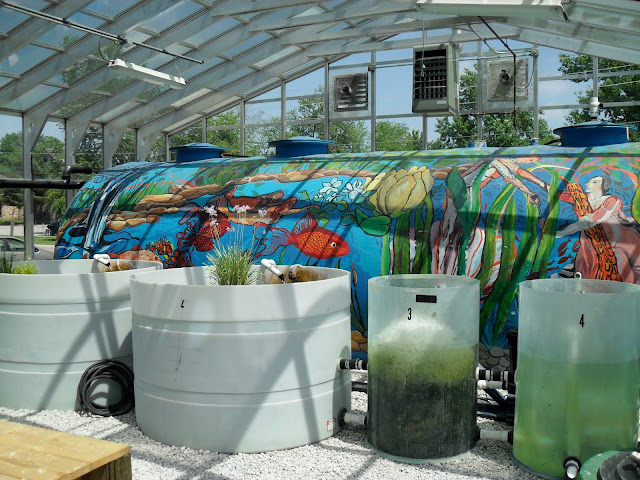
Day Three: We hit the road for Berea College in eastern KY to explore Berea’s Eco-Village and Farm Gardens. Professor Richard Olson expounded on his theories of the most-of-us speeding towards hell in a hand-basket – due to the rate we use electricity, water, petroleum, etc. (Sometimes doomsday global warming pessimism is not my cup of tea – it’s more like a cup of gas station coffee). After stepping off his soapbox, he showed us around Berea’s Eco-Village – ever-evolving with aquacultured tilapia, biointensive growing, photovoltaic (PV) panels, greywater treatment system as well as demonstrations in natural building, including: cob, cord wood with cob mortar, earth bag, earthen plaster, and straw bale. Berea’s Eco-Village is open exclusively for 4 interns in the Sustainability and Environmental Studies program – as well as students of Berea who are single parents.

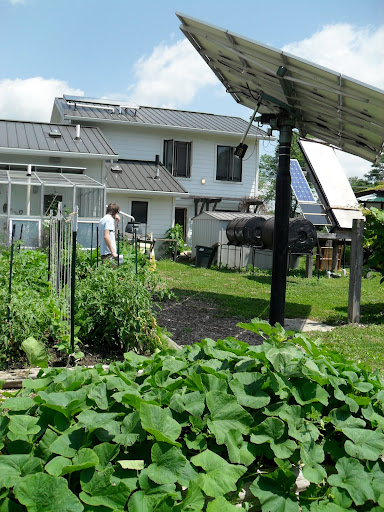
garden and pv panels at berea’s eco-village.

From the Eco-Village, we journeyed to the other side of Berea College to the farm, gardens and greenhouse – a total area of 500 acres. In addition to vegetable production, Berea operates an apiary (honey flavored by blueberries and buckwheat), hoop houses for season extension, mushroom spore-infused-logs, and a cord wood root cellar. We were not able to see their livestock production – but Berea does that, too. All produce is sold at local farmers markets for a flat rate of $8/lb. The school also purchases produce for use in its cafeteria, at a rate of $6.50/lb. These prices are extremely high, for the majority of crops – but the people of Berea are willing to pay. The farm and gardens are maintained by students in the College’s Agriculture Department. All students at Berea are required to work for tuition (10-15 hours/week) – no other costs are associated with tuition. Another similar college is School of the Ozarks in Missouri.

cord wood structure.

Vegetables grown at Berea College are Certified Organic – meeting the USDA’s standards and definitions of organic practices. Organic certification is a highly contentious topic amongst small scale agrarians. Both Field Day Farm at Oxmoor Farms in Louisville and World Hunger Relief Farm in Waco choose not to certify their produce – although each farm meets, and exceeds, the USDA’s standards. Farmer Igor at Field Day Farm choose not to certify due to moral convictions – both that the standards are too loose, while being relatively expensive. He also notes that small scale farming is about relationship with the consumer – and if a strong relationship is in place, all farming practices are transparent – and thus certification is unnecessary.

llama lovin’ at liles organic acres.

After Berea, we traveled to Maryville, TN – to visit Liles Organic Acres, a small family farm operated by Sheri and Russell Liles. Here we met the llamas. Sheri – a self-proclaimed back-to-the-land hippie – showed us around the farm. She grows vegetables in 25 raised beds – that have been double-dug and enriched each year with layer upon layer of compost. She and Russell keep seven compost piles around the farm – enriched by rabbit, llama and chicken poop – as well as leaves, food scraps and red wigglers. Her vegetables are sold at market – and chooses not to certify organic. In addition to vegetables, Sheri also keep llamas and angora rabbits from which she can spin the wool – as well as growing cotton and flax, to be spun by her mother-in-law for linen. Both Sheri and Russell work part-time off the farm – she as a nurse practitioner, he as a picture-framer. Russell is also a crafted wood-worker and quite engineer-ed-ly minded, installing PV panels that supply 25% of their energy use and building the llama barn, chicken coops and beehives.

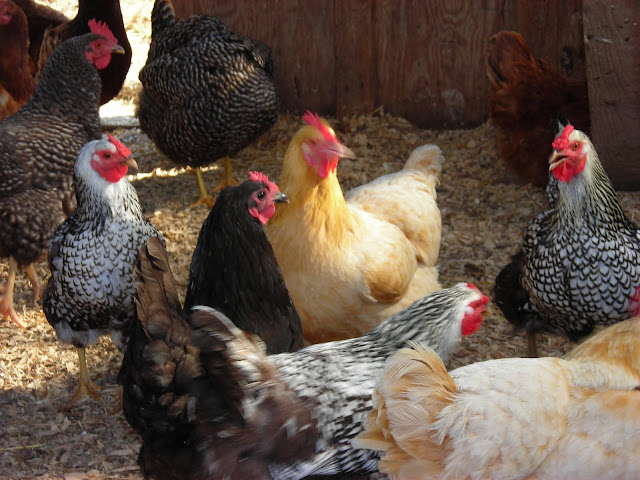
chickens at liles organic acres.

Once we departed the Liles farm, we met up with locals from the Highland Presbyterian Church in Maryville – to share stories and recipes over a potluck of locally produced grub.

End Day Three. End Part One.

- bethel, agrarian road tripper.

Tuesday, May 11, 2010

Don't explode your brain

This post was originally published at Yellow Inkling.

I had a great discussion with our current Service Learning group about what can practically be done – by you and I - about poverty in this world. But wait – what’s a Service Learning group?

P4300855 At World Hunger Relief, we host several Service Learning groups a year. Part of the mission of the Farm is to “educate those with an economic abundance on methods of conserving and sharing resources.” Our Service Learning program, along with our fun-filled (and rabbit poop, worm, goat, chicken, garden-filled) Farm tours, and sending farmers off the Farm to speak, are ways we do this in our community. And...surprise! One of my main jobs here on the Farm is to manage all three of these education programs.

Our Service Learning groups come from schools, churches, families, and universities. They stay for varying lengths, from 8 hours up to two weeks. During Spring Break time (March-April) we are super busy with several Alternative Spring Break groups from colleges around the country.

Right now we have a National Summer Service Team from University of Michigan on the Farm. They’re one of our longer- staying groups just a day shy of two weeks. They’ve been an ideal group and I’ve really enjoyed getting to know them.

Last night I hosted one of my favorite Service Learning activities for them – Hunger Meal. The activity includes a meal, a presentation, and a discussion at the end. At the beginning, each participant chooses a life situation card. The card includes a name, country of residence, income bracket, and a short description of daily life – struggles, work, family, etc. Each participant is then fed according to the card they randomly picked.

I try to schedule this activity after a hard day’s work and the groups are asked not to snack between lunch and the activity which typically takes place during the evening. The “high-income” people are seated at the table with a ridiculous amount of food, usually including a balanced meal with meat, several beverage selections, and dessert. “Middle-income” participants are seated in a chair and are given beans and rice in a bowl with a spoon and a glass of water. “Low-income” participants are seated on the ground and given a large pot of rice to share amongst themselves, along with glasses of “dirty water” (water colored light brown with a splash of coffee or tea). It usually breaks down to about 15% of the group being high-income, 25% middle-income, and 60% low-income.

While the participants eat, they share their cards and I present current statistics and issues regarding world hunger and poverty.

In all honesty, although this is my favorite Service Learning activity to lead, it’s a difficult one. It’s difficult to talk about hunger and poverty in regards to statistics and generalities. In fact, in the past, I’ve often avoided talking about these problems because I didn’t know of a good way without mentioning the often sterile and meaningless statistics. But after first learning how to lead this activity I realized something – some people have never heard these statistics; they might know that there are hungry people in the world, but they don’t realize that it’s a sixth of earth’s population. I’ve learned that it’s okay to start with: currently, there are 1.6 billion people living on less than $2 a day – 900 million people in this world go hungry every day.

I say this to people who, at this point in the day, are very hungry themselves, given a handful of rice after a many hours of hard work. Then, I move closer to home – Texas is the second hungriest state in the Union – 15% of people living in Texas go hungry every day. After presenting the dry facts (that may be less dry with rumbling stomachs), I share what the Farm is doing and what they can do themselves. Last night we had a great discussion about this.

The issue was this: what can we practically do about poverty in the world? The problem is a big one and if we were to think about all the complexities at the same time and worry about and try to solve all of them, our heads would explode our pink brains everywhere. Instead, we discussed a few important steps. If you are wondering about what you can do, read on. This is what we came up with.

  1. Education – educate yourself about what’s going on. Familiarize yourself with some statistics. I told the group last night that they were in fact doing something about poverty and hunger by taking that first step: coming to the farm and learning about what’s going on in Waco, Texas, our country, and the world. You can start with our links. Quick intros like 12 Myths About World Hunger are also a good start.
  2. P3150781People – surround yourself with like-minded people, people who care about these issues and want to learn more, too. They don’t have to have the same ideas as you – in fact, the purpose of finding like-minded people is to learn from them and share perspectives, while also being encouraged. This was one of the reasons why I wanted to come to the Farm. These people are everywhere – your school, your church, maybe your family, your friends (exhibit A: the lovely specimens pictured above.) There may be groups near you that are already meeting and doing something (think Texas Hunger Initiative, McLennan County Hunger Coalition, Heart of Texas Urban Gardening Coalition, etc).
  3. Resources and Your One Thing – As people that live in America, we have to start looking at where we are putting our resources. This is often the hardest step. Even those who don’t consider themselves “rich” have enormous amounts of resources (money, time, influences). As we talked about this last step, we decided that the best way to handle this is to start small. Pick one part of your life to examine. A few years ago, when James and I first started looking specifically at the issue of hunger and how it relates to the food system, we decided to pick one thing to change.
P9100078 I started with my eggs. We eat a lot of eggs and I knew that most of the eggs sold in grocery stores were produced by chickens that were abused, pumped full of grain (which could be used elsewhere) and antibiotics, and cared for by people who are often abused themselves by employers. And so we concentrated on eggs: just finding a supplier for eggs that I knew, either through friends or the farmer’s market, or even getting a few of my own chickens. After we did that, we went on to milk, then meat. But we took it one thing at a time. And yes, sometimes that one thing took six months to solve, find, or incorporate into our lives. But since we did gradually, it didn’t make our brains go ka-boom-splat.

Maybe you drink an insane amount of coffee – maybe that could be your “one thing.” Take time and find out where your coffee comes from. With coffee being one of the biggest reasons why modern slavery exists, you could take some time and find a Fair Trade supplier or talk to your local coffee shop owner about serving Fair Trade coffee.

Fair trade net-logo Fair_Trade_Federation_Logo Transfair-usa-logo

So, go! I release you from this ridiculously long blog post. Go learn and educate – go find those like-minded people (come to the Farm!) – and find and start with your one thing.

Oh, and if you get stuck, drop us a line at the Farm.

(Maybe your thing is Vodka? Solved. Ha.)

Monday, May 10, 2010

May 22 Block Walk to promote summer food program

The McLennan County Hunger Coalition, of which World Hunger Relief is a member, is having a community block walk to help promote the summer food program for children in Waco.

This is an opportunity to partner with the farm in a larger community event. People from the farm will be present and we hope some of you might like to participate as well. Here is the original message:


The McLennan County Hunger Coalition would like to invite you to participate in a first step for this summer by promoting awareness of the summer food program for 2010. Over 28,000 kids receive nutritious meals during the school year. The Summer Food Program fills the hunger gap with meals and snacks when school’s out. Every child can receive free meals during the summer, yet in 2009, only 6.7% of eligible children participated. We need your help to participate with us in getting the word out.

Join the McLennan County Hunger Coalition on May 22 from 9am to 12noon for a community block walk to promote the summer food program. We will focus on specific sites in three areas of our community- North, South, and East Waco. Congregations, school groups, and committed individuals are encouraged to show up for a few hours and help us spread the word about the program.

If you plan to participate, please RSVP to Alexis Weaver: aweaver@wacochamber.com by May 17, and indicate the area of Waco that you would like to be involved in. We will send information prior to May 22 with the meeting location, block captain, and any other pertinent details.

We appreciate all of your support to end hunger in McLennan County.

Sincerely,

The McLennan County Hunger Coalition

Alexis Weaver
Director of Community Affairs
Community Development
aweaver@wacochamber.com

Monday, July 13, 2009

Food in the Bible: Sabbath

When I wrote a post on Joseph's experiment in redistribution, I was stunned by what I found. It is still profoundly disappointing to see such injustice, particularly in our own scripture. As I pondered that, however, I thought that perhaps the Year of Jubilee in Leviticus 25 is the antidote. In Joseph's story he tries to bring about a just distribution of goods and fails miserably. In Leviticus 25 we are given a model that seems to undo this kind of injustice, but scholars tell us it was probably never tried. This idea that Jubilee is the antidote to our failing human efforts at justice brings me to a foundational concept in Scripture that serves as a basis for much of my thinking on food, poverty and justice... Sabbath.

J.D. Crossan in God and Empire says, "It is not humanity on the sixth day but the Sabbath on the seventh day that is the climax of creation... our 'dominion' over the world is not ownership but stewardship under the God of the Sabbath" (53). The reason that scripture gives for observing the Sabbath is not worship, which most Christians and maybe Jews seem to think. The reason given is so that the slaves and foreigners could have rest as well (Ex 23:12; Deut 5:14). Again Crossan says,
The Sabbath Day was not rest for worship, but rest as worship... In summary, the Sabbath was about the justice of equality as the crown of creation itself (54).
The Sabbath Day is extended to the Sabbath Year (Ex 21:2 and Deut 15) and finally the Sabbath Jubilee (Lev 25). Every seventh year both male and female slaves were to be set free and debts were remitted, or forgiven. Provisions are given for both male and females to ensure that they are cared for within the social context of the time. Both male and female slaves are to be restored to a just and equal standing in the community when they are set free. Deuteronomy warns that masters should not consider this a hardship. Lenders are also warned that they should not withhold loans from their needy neighbors when the seventh year is close. "Your neighbor might cry to the Lord against you, and you would incur guilt" (Deut 15:9)

The Jubilee goes even further by commanding that every seventh Sabbath Year "you shall return, every one of you, to your property and every one of you to your family" (Lev 25:10). God had divided the land up between the tribes, but knew that inevitably inequality and injustice would creep in. The Jubilee is the final rule that prevents inequality from remaining within the people of God. Lest we think this applies only to Israel or the church, remember that the purpose of God's covenant with Abraham constituting the people of God was that "all the families of the earth shall be blessed" (Gen 12:3). Israel was meant to be a model to the rest of the nations of what it meant to live in relation to God and each other.

The Sabbath was not just about people either.

"For six years you shall sow your land and gather in its yield; but the seventh year you shall let it rest and lie fallow, so that the poor of your people may eat; and what they leave the wild animals may eat. You shall do the same with your vineyard and your olive orchard" (Ex 23:10-11).

The whole of creation rests on a foundation of balance between work and rest. This passage also clearly indicates the relationship between the work and rest of the land and the people as well as the implications for equality and justice. Thus the right ordering of relationships, between people and between people and the earth involves a balance of work and rest which ultimately results in just distribution of resources.

Crossan sums it up by saying that through the progression of Sabbath laws "we can see clearly the demand of God for a just distribution of land-as-life based on the creation theology in Genesis 1:1-2:4a" (71).

Originally posted at What Would Jesus Eat? this is part of an ongoing series reading through the Bible with food as a lens.

Thursday, February 5, 2009

Alumni Returns to Waco

Here is a post from the Baylor Website about a WHRI alum.


Jeremy Everett Named To Direct Texas Hunger Initiative At Baylor School Of Social Work
Feb. 4, 2009

Contact: Vicki Kabat, Baylor University School of Social Work, (254) 710-4417

Jeremy Everett will join Baylor University's Center for Family and Community Ministries (CFCM) in February to direct the Texas Hunger Initiative, a new project to alleviate hunger in the state that is being sponsored jointly by CFCM and the Christian Life Commission.

"With some organization and creativity, hunger in Texas can be alleviated, and I think we'll be well on our way to that within six years," said Everett, who earned his undergraduate degree in religion and history from Samford University and his master's of divinity degree in 2001 from Baylor's George W. Truett Theological Seminary.

The THI project comes alongside hunger ministries related to the Texas Baptist Offering for World Hunger through the Baptist General Convention of Texas, which currently provides $475,000 for 95 Texas hunger ministries. The initiative will build capacity of existing ministries that are addressing hunger in the state. Initially, the project will identify regional leaders in the state and create networks, meeting the different needs of each region.

"I appreciate that this project begins by assessing strengths, and then allows us to build upon those strengths with a model that incorporates cultural and environmental sensitivity," Everett said. "We already have a lot of great efforts to alleviate hunger in place."

Suzii Paynter, director of the BGCT's Christian Life Commission, is excited about partnering with the Baylor School of Social Work. "It's like a new harvest to have the Baylor School of Social Work as a partner to boost and nourish the network of Texas Hunger Offering ministries," Paynter said. "Great people are doing God's work caring for the 'least of these,' and this project will give them tools, support and blessing for ever greater things, especially as we focus on Texas HOPE 2010."

Everett has spent the past five years in San Antonio's West Side, a historically low-income area where he lived with his wife, Amy (MDiv/MSW, 2004) and their two children, Lucas, 4, and Sam, 2. Employed by Baptist Children and Family Services, Everett helped start Guadalupe Street Coffee, a café with computers, wireless Internet service, murals painted by local artists and meeting spaces. As a community developer in West Side, Everett worked to bring together members of the City Council, business owners, and students and administrators from the area's Sidney Lanier High School.

The coffeehouse employs an average of seven people and sponsors a variety of youth and community programs, including college assistance, art events and business development meetings. Now, $2 million in city and federal grants are slated to further economic development in and around the coffeehouse, according to an article by Abe Levy in the Jan. 24 San Antonio Express-News.

The Texas Hunger Initiative will give Everett opportunities to use his community development skills on a broader scale. Initially THI will focus on El Paso, the Valley, and Bexar and McLennan counties, seeking to develop and implement strategies to alleviate hunger through policy, education, community organizing and community development.

"We have chosen to focus on these areas first because there are existing programs and relationships," Everett said. "We can build upon the trust that is already there and grow successful partnerships."

Everett will spend the first months in his new role getting to know dedicated people who address the needs of the hungry every day and involving social work graduate students in the initiative.

"The process we'll put together for the hunger initiative is the same one I used in San Antonio, and both use social work principles," he said. "Students interested in community development and community organizing will graduate from the Baylor School of Social Work with direct practice experience gained through this initiative."

Baylor's School of Social Work began a concentration in community development this past year, and students already have been effective in a specific community building effort to alleviate hunger. The fall 2008 practice class researched, organized, chartered and began a Campus Kitchen, based on the national program in Washington, D.C. Now a part of Baylor's Student Life Division, the kitchen will retrieve unused, quality food from campus dining providers, local restaurants and grocery stores, and feed nonprofit groups and to local service agencies this spring.

In addition, the CFCM has researched and written original curriculum titled "Understanding Poverty," that now is being tested in congregations before final publication.

"We have found that churches are nearly begging for resources to help them address community needs," said Dr. Jon Singletary, CFCM and assistant professor at Baylor's School of Social Work. "We will continue to develop a curriculum on poverty to present to churches and civic groups as a way to introduce and prepare them to engage impoverished families in their communities."

The initial three-year funding of $100,000 annually for the THI will come from grants, gifts and BGCT sources. Everett will be located at the CFCM in Baylor's School of Social Work.

"Feeding hungry people and developing communities so that families can afford to feed themselves - that's what Jesus called us to do," said Dr. Diana Garland, dean of the Baylor School of Social Work. "I am thrilled we will be working with the Christian Life Commission of the BGCT to help congregations bring an end to hunger and the poverty that creates hunger in their communities."